Geostrategic Media Political Commentary, Analysis, Security, Defense
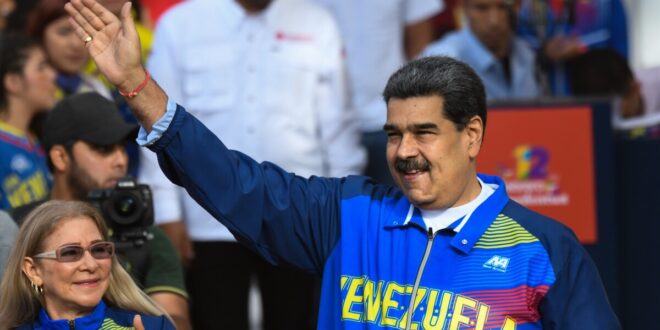

The Donald Trump administration has not divulged many details about how it plans to initiate Venezuela’s energy and political transition.

President Donald Trump has decapitated Venezuela’s socialist government and shaken up regional and global politics with his daring operation to capture—and effectively depose—the country’s president, Nicolás Maduro, who now awaits trial in New York. Yet Mr. Trump’s apparent plan to use the carrot of US investment and renewed economic growth, as well as the stick of a blockade and sanctions, to “run” Venezuela’s foreign policy and its energy and natural resources policy will require more than a few hours to succeed. And at least so far, US energy executives seem somewhat less interested in Venezuela than administration officials. How Venezuela’s leaders and people will respond remains to be seen.
On January 15, the Center for the National Interest invited two expert speakers to discuss these and other key issues that have arisen in the last two weeks:
—Dr. Vanessa Neumann is the founder and president of the Latin American business advisory firm Asymmetrica. She was appointed Venezuela’s ambassador to the United Kingdom and Ireland by the National Assembly during the leadership crisis following Venezuela’s 2019 presidential election, though Nicolás Maduro ultimately retained his hold on power. She was previously a member of the OECD’s Task Force on Charting Illicit Trafficking. She earned a PhD from Columbia University and has worked both as an international journalist and in corporate planning and finance in Caracas.
—Richard Sanders, the Center for the National Interest’s senior fellow for the Western Hemisphere, is a retired US diplomat and former member of the Senior Foreign Service. He has served as foreign policy advisor to the US Army Chief of Staff (General Mark Milley), as chargé d’affaires and deputy chief of mission at the US Embassy in Canada, and as director of the State Department’s Office of Brazilian and Southern Cone Affairs, among other posts. He has served in US Western Hemisphere embassies in Chile, Colombia, Nicaragua, Uruguay, and Venezuela.
Paul Saunders, the president of the Center for the National Interest, moderated the discussion. He is also the publisher of The National Interest. His expertise spans US foreign and security policy, energy security and climate change, US-Russia relations and Russian foreign policy, and US relations with Japan and South Korea. Saunders is a Senior Advisor at the Energy Innovation Reform Project, where he served as President from 2019 to 2024. He has been a member of EIRP’s board of directors since 2013 and served as chairman from 2014 to 2019. At EIRP, Saunders has focused on the collision between great power competition and the energy transition, including such issues as energy security, energy technology competition, and climate policy in a divided world. In this context, he has engaged deeply in energy and climate issues in the Indo-Pacific region, especially US relations with Japan and South Korea. His most recent project at EIRP is an assessment of Russia’s evolving role in the global energy system.