Geostrategic Media Political Commentary, Analysis, Security, Defense

By Hosein Mortada
Israel’s announcement recognizing “Somaliland” has sparked deep regional—and wider international—concern. This is not merely because the move involves a self-declared entity lacking international recognition, but because it directly touches one of the world’s most sensitive geopolitical theaters: the Red Sea and the Horn of Africa. The political and security implications of this step extend far beyond bilateral diplomacy, striking at the heart of regional stability and global trade.
At its core, the danger of this recognition lies in the precedent it sets. Endorsing a secessionist entity undermines the territorial integrity of African states and risks encouraging similar separatist movements across a continent still grappling with fragile state structures and the long shadow of colonial borders. Such a move threatens to reopen fault lines many African countries have worked—often with great difficulty—to contain.
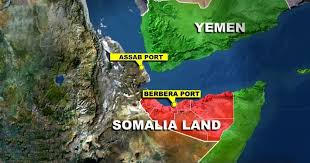
More critically, recognition raises the prospect of an Israeli military or intelligence presence near the Bab al-Mandab Strait, one of the world’s most vital maritime chokepoints. Any expansion of foreign military or intelligence activity in this area would inevitably alter the strategic balance, heighten tensions among Red Sea littoral states, and accelerate the militarization of already crowded sea lanes.
From a Red Sea security perspective, this development risks disrupting the fragile equilibrium among coastal states. Increased militarization of maritime corridors would place international navigation, global trade flows, and energy shipments under greater threat, potentially transforming the Red Sea into yet another arena for regional and great-power rivalry.
For Egypt, the implications are particularly acute. Any Israeli presence near Bab al-Mandab constitutes an indirect threat to the security of the Suez Canal, a cornerstone of Egypt’s national economy and strategic standing. It also compounds existing geopolitical pressures linked to instability in the Horn of Africa and the unresolved Nile water dispute. More broadly, this expansion of Israeli influence into areas traditionally considered part of the Arab strategic sphere poses challenges to Arab collective security.
Yemen, meanwhile, stands to be further destabilized. Israeli recognition of “Somaliland” risks deepening the internationalization of the Yemeni conflict and placing Bab al-Mandab under overlapping layers of surveillance and control. This would directly undermine Yemen’s maritime security and further erode an already fragile regional environment.
Ultimately, Israel’s recognition of “Somaliland” cannot be dismissed as a narrow diplomatic gesture. It represents a strategic shift with far-reaching consequences for Red Sea security and Arab national interests as a whole. The moment calls for a unified Arab response—one that firmly rejects the fragmentation of states and underscores the imperative of safeguarding the stability of vital maritime corridors upon which regional and global security depend.