Geostrategic Media Political Commentary, Analysis, Security, Defense

By Dr. Shehab Al-Makahleh
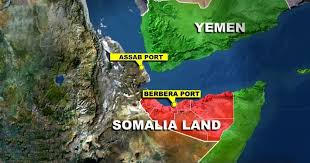
In a surprising move, the Houthis in Sana’a issued a sharply worded statement in response to Israel’s recognition of Somaliland, asserting that any Israeli presence in the region constitutes a legitimate military target. While brief and direct on its surface, the statement carries long-term strategic implications that could reshape the balance of power in the Red Sea and the Horn of Africa, presenting unprecedented diplomatic and security challenges for Arab and regional states.
Key Points of the Statement
The Houthi statement can be summarized in seven main points that encapsulate Sana’a’s position on Israel’s recognition of Somaliland. First, any Israeli presence in Somaliland is deemed a legitimate military target for Houthi forces. Second, the statement was issued in direct response to Israel’s recognition, labeling it illegal and threatening to regional stability. Third, the statement stressed that an Israeli presence constitutes a comprehensive threat to Somaliland, Yemen, the Gulf of Aden, and Red Sea littoral states. Fourth, it highlighted Israel’s intentions to establish a foothold in the Horn of Africa, destabilize the region, and redraw the Middle East map. Fifth, Sana’a rejected any legitimacy for this presence, deeming it hostile and unlawful. Sixth, the statement called on the Arab and Islamic nations to adopt a unified stance to prevent the consolidation of any Israeli presence. Finally, it expressed Sana’a’s support for Somaliland and its people in facing any external threat, framing Yemen’s position as reflective of the broader Arab stance on the recognition.
Strategic Dimensions
The statement carries five principal strategic dimensions that reveal the depth of Sana’a’s regional calculations. First, the political and diplomatic dimension, seeking to enhance Sana’a’s image as an influential regional player, embarrass Red Sea states attempting to preserve stability, and intensify polarization and new alliances around the issue. Second, the military and security dimension, serving as a deterrent against any Israeli military or intelligence cooperation in Somaliland while heightening security sensitivity in the Red Sea and Bab el-Mandeb. Third, the regional dimension, affecting Somaliland’s diplomatic maneuvering and signaling caution to smaller states considering recognition of Israel. Fourth, the economic and maritime dimension, as any tension or potential threat could negatively impact insurance rates, shipping, and global supply chains, particularly through Bab el-Mandeb and the Gulf of Aden. Finally, the broader strategic dimension, emphasizing that Africa is not a safe environment for Israeli military presence, that shifts in regional balances will carry costs, and demonstrating the Houthis’ capacity for political initiative without resorting to direct military confrontation.
Potential Scenarios
The statement outlines four potential escalation scenarios. First, the containment scenario, the most likely, involves a primarily political and verbal threat without any actual Israeli presence in Somaliland, granting Sana’a a symbolic and regional victory without military costs. Second, limited tension, with indirect messaging or constrained intelligence cooperation between Israel and Somaliland, accompanied by military displays and increased maritime surveillance, putting additional pressure on Somaliland while remaining a manageable escalation. Third, limited security friction, occurring if a small Israeli presence is detected on the ground, such as advisors or training camps, prompting a limited Houthi response to signal seriousness, followed by diplomatic intervention to prevent broader escalation. Finally, the direct confrontation scenario, least likely but most dangerous, involves full-scale military engagement between Sana’a and Israel, potentially drawing in regional actors and risking the slide of the Red Sea and Gulf of Aden into a wider conflict.
This statement demonstrates how a local actor in Yemen can exert regional influence beyond its internal conflict. By adopting a strong, calculated rhetoric, the Houthis assert themselves not only militarily but also as a political and strategic player capable of reshaping regional balances in the Red Sea and the Horn of Africa.
At the same time, the statement underscores the vulnerability of small states like Somaliland, which may face a diplomatic and economic dilemma following Israeli recognition, while major powers may seek to contain the situation through diplomatic channels to prevent a full-scale escalation.
This development represents a critical test of power balances in the Horn of Africa, raising significant questions about the capacity of regional and international actors to respond to the deterrence policies employed by nontraditional actors in the region.