Geostrategic Media Political Commentary, Analysis, Security, Defense


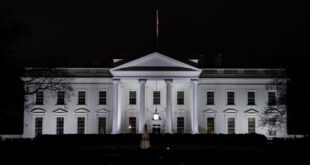
Perhaps the most atrocious focused assault on 26 November in downtown Washington, which is just a few blocks off of the White House, where two United States National Guard troops were in critical condition, is a blacker chapter in the history of the world of global terror. The fact that the suspect is an Afghan citizen named Rahmanullah Lakanwal has brought a shiver to capitals around the world since the threat that was bred in Afghanistan during the Taliban rule is no longer a threat in South Asia or the Middle East, but it is one that it has brought to the core of the United States. It was not a singular act of random acts of violence; it was a by-product of an ideological ecosystem that does not only glorify militancy but also sacrifices bloodshed and systematically creates people who can cross borders with militancy with lethal precision.
After the Taliban returned to power, Afghanistan steadily evolved from a desperate post-war nation to the greatest center of transnational terrorists in the world. The current state of affairs is densely populated with militant terrorist groups acting freely within the territory of Afghanistan, including Al-Qaeda, Tehrik-e-Taliban Pakistan (TTP), Islamic State Khorasan Province (ISKP), and other regional organizations. These are not unique groups threatening the neighbor nations, but they are an export chain of extremism in the world. Afghanistan has now become a training ground, a financial conduit, an ideological nursery, and a dispatch center of the terror networks that have now been further extended to South Asia and Central Asia in the Middle East, to Europe, and, most importantly, to North America. The Washington attack was a result rather than an accident.
A hard pill to swallow of this new reality is the fact that the United States single-handedly suspended the immigration of Afghanistan right after the attack. It is a growing recognition that conventional security screening systems are confronted with inalienable challenges of restricting threats that come about as a result of the fact that environments have been compromised by extremists to the point that they are now completely infested. This suspension is based not on bigotry but on the hard mathematics of national security. When any one of the states is incapacitated or not willing to sever their connections with the terrorist networks, this leaves the rest of the world with the only alternative of erecting defensive fences. The Taliban regime has left the world vulnerable by its inability to provide the simplest minimum counterterrorism guarantees.
This direction was not cautioned. The estimates by the United Nations in 2025 had already sounded the alarm that Afghanistan was already the world’s active haven of militants. These were accounts of how the state had become a gravitational center of jihadist recruiting, weapon trading, money laundering, and ideological cross-pollinating. Attacks associated with surfaces based in Afghanistan were already experienced in South Asia and Europe as early as the late 1990s. The Washington attack today confirms the fact that there is no geographical distance that is beyond the reach of terror sanctuaries that are accorded a free hand to practice.
The provocative but necessary policy of Pakistan to repatriate illegal Afghan nationals would be corroborated in totality in that respect. Hating the people of Afghanistan has never been the driving force of this policy, and they are victims of decades of war and turmoil as well. Rather, it is a survival tactic. The cross-border militancy has been costing Pakistan dearly; tens of thousands of lives have been lost as a result of the exportation of the terrorism on the Afghan land. The incidents that occurred in Washington are sad, and they enable us to conclude that this threat is not local anymore; it is universal. The duty of any individual state of the former instance is to protect its citizens, and the act of Pakistan ought to be perceived in the prism of duty and not the politicized turn.
Not less troubling is the role of the outside force, which, with the political favor and material encouragement, has helped the outliving of the Taliban system of governance. The same ecosystem that is causing a threat to international security has been reinforced unknowingly by the far-reaching financial, political, and infrastructure cooperation of India with the Taliban regime. This assistance has been employed in the provision of credibility and resources to a regime that houses internationally declared terror groups despite the fact that this is under the guise of humanitarian intervention and strategic diplomacy. In the case of geopolitics, intentions are less than the consequences; the consequences now have overflowed into the streets of Washington.
What was even worse was the mobilization of pro-Taliban propaganda networks that was rather rapid in the aftermath of the attack. A few hours later, coordinated disinformation had taken over the internet, praising the bloodshed and spreading polarizing messages that were supposed to divide people and irresponsible messages. With the help of India-related online ecologies, these campaigns of propaganda revealed the new order of extremism: not guns and bombs, but algorithms, hashtags, and weaponized stories. In the modern world terror does not attempt to kill but to create perception, to establish a notion of normalization of brutality, and lastly to tear up societies within themselves.
Yet even in this darkness, togetherness is there. The fact that Pakistan responded very well to the United States when they expressed their sympathy towards the 26 November attack in Washington points to a mutual understanding that is achieved through a mutual pain. Pakistan knows too well what it would be to be uniformed men shot in ambush, to have waiting families down the hospital corridors, and to have traumatic lingering pain within minutes of terror acts. The reason as to why doing the right thing and being with the American people at this moment is no longer a diplomatic thing to do but a moral obligation over the entire experience.