Geostrategic Media Political Commentary, Analysis, Security, Defense


Dr. Shehab Al-Makahleh
President Donald Trump has never disguised his admiration for strong-willed leaders. His vision of political stature is less about diplomatic elegance and more about a leader’s personal toughness and willingness to assert power unapologetically. This worldview dramatically shapes his approach to foreign policy, particularly in relation to Europe.
Today, figures like Argentina’s Javier Milei, El Salvador’s Nayib Bukele, Hungary’s Viktor Orbán, Israel’s Benjamin Netanyahu, and even authoritarian leaders like Russia’s Vladimir Putin and China’s Xi Jinping enjoy privileged access to the White House. Trump openly praises Syria’s new ruler, Ahmed al-Shara — a former terrorist — as a “tough guy.” North Korea’s Kim Jong-un receives similarly warm remarks, with Trump stating, “I had a very good relationship with Kim.”
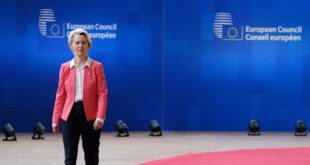
In this context, Europe struggles to fit into Trump’s concept of global leadership. Leaders such as Ursula von der Leyen and Kaja Kallas fail to meet his “toughness” criteria. Emmanuel Macron is dismissed as “a nice guy,” while Germany’s Friedrich Merz does not resonate with Trump’s ideals. Italy’s Giorgia Meloni is closer to Trump’s instincts, yet perhaps not close enough to garner real admiration. Even Alexander Stubb of Finland, who is often labeled as the only European who “understands Trump,” is nonetheless dismissed as just another “nice guy” and — notably — a good golfer.
This mismatch partly explains the significant deterioration in transatlantic relations during Trump’s second term. To Washington, Europe comes across as feeble, indecisive, economically exhausted, paralyzed by migration challenges, technologically lagging, militarily dependent, and demographically shrinking. The National Security Strategy unveiled by the Trump administration underscores this perspective with alarming clarity.
The document warns of Europe’s “civilizational erasure,” arguing that its issues extend beyond military under-investment and slow economic growth. It accuses the European Union of undermining political liberty and sovereignty, criticizes migration policies that exacerbate social divides, condemns censorship and suppression of dissent, and laments plummeting birth rates and encroaching loss of national identities.
This dire portrayal, while exaggerated, is not entirely without foundation. Europe faces overlapping crises, ensnared in moral posturing and increasingly reluctant to project power. Such weaknesses inevitably diminish its global influence — particularly in negotiations surrounding Ukraine — effectively ceding ground to the “tough guys” that Trump admires.
The ideological rift between Washington and Europe has widened dramatically. Many American conservatives now depict the U.S. as the bastion of Christianity against a tide of globalism and “wokeness,” painting liberal Europe not as a partner but a threat to Western civilization itself. Some MAGA voices even cast Russia as a closer ally than Brussels, believing Europe’s salvation hinges upon the rise of far-right parties like France’s National Rally, Germany’s AfD, or Spain’s Vox.
Climate policy emerges as yet another battleground. While Europe embraces the green transition as an imperative, senior U.S. officials publicly question climate science. The clash between the “Green Deal” and the mantra of “Drill, baby, drill” is sharp and profound.
This divide also extends into the realm of international law. When asked about U.S. military actions in the Caribbean, Secretary of State Marco Rubio retorted, “I don’t think the European Union gets to determine what international law is.” Washington’s distancing from the UN, its sanctions on ICC judges, and its acceptance of Israeli military tactics in Gaza all reflect an insistent unilateralism.
Artificial Intelligence represents yet another fault line. Americans view AI as an avenue for opportunity; Europeans are more likely to focus on its potential risks. Americans argue, “We’ll create more jobs than we lose,” while Europeans harbor fears of the opposite.
In this environment, how does Trump perceive Central Europe? Ironically, Central European nations benefit from a long-standing American tendency to equate “Europe” with its western half. Even 35 years after the Iron Curtain’s collapse, many in Washington regard Eastern and Central Europe as an ambiguous, post-Soviet periphery. This stereotype represents both a burden and an opportunity.
For governments in Warsaw, Prague, and beyond, the dilemma is acute: Should they lean into their European identity, despite being seen as weak by the White House? Or should they attempt to present themselves as the “tough guys” of the East, risking alienation from Berlin, Paris, and Brussels?
Few European states can adeptly balance both worlds, maintaining strong ties with Washington as well as Berlin and Brussels. Poland stands out as one of the rare exceptions, boasting a steadfastly pro-American president alongside a passionately pro-European prime minister. However, domestic politics in Poland remain deeply polarized, dominated by pro-Trump and anti-Trump narratives that leave little room for the strategic nuance that Poland once mastered.
In this sense, Poland resembles the Middle East more than it might wish to acknowledge: it “never misses an opportunity to miss an opportunity.” As Europe grapples with its identity amidst Trump’s strongman criteria, the future of transatlantic relations hangs in the balance. The time has come to re-evaluate our strategies and forge a path that bridges divides, ultimately strengthening our collective global position.