Geostrategic Media Political Commentary, Analysis, Security, Defense

Mireille Bogas
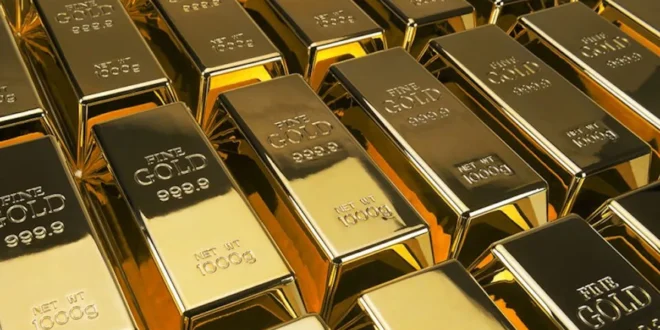
Anyone who thinks gold’s surge into the stratosphere represents irrational exuberance isn’t paying attention to the wretched state of the Group of Seven (G7) economies. As the price of gold skyrockets, it serves as a sentinel, warning us of deeper systemic issues festering beneath the surface.
Consider the United States, where government debt has soared to a staggering $37 trillion. This monumental figure is causing ratings agencies to reassess the underlying health of the world’s largest economy. When a country’s debt reaches such astronomical heights, it raises red flags about fiscal responsibility, long-term sustainability, and economic resilience. Investors are rightfully concerned, and many are flocking to gold as a safe haven.
Meanwhile, France is grappling with a dual crisis that has its political landscape in turmoil while also threatening its financial stability. The International Monetary Fund (IMF) is reportedly evaluating France’s reserves, bringing to light concerns over economic viability in a country that once prided itself on its robust welfare state. The perception of insecurity, both politically and economically, is driving investors to seek refuge in gold—an asset that has stood the test of time.
Germany, often seen as the economic backbone of Europe, is also teetering on the edge of recession. Industrial output plunged by 4.3% in August compared to July, signaling a severe contraction that reflects broader issues within its manufacturing sector. This distressing trend worries not just Germans but all of Europe, as Germany’s economic health is intricately linked to the stability of the Eurozone. In uncertain times, gold shines brightly for those looking to safeguard their wealth amidst looming economic shadows.
Across the English Channel, the UK is facing its own existential questions. Some commentators are already speculating about how long the country can avoid a 1970s-style crisis that would necessitate IMF intervention—just three years post-Liz Truss’s disastrous economic policies. Trust in the UK’s fiscal management is dwindling, and as fears mount over inflation and ineffective governance, citizens are looking for stability, further fueling gold’s appeal.
In a landscape marked by uncertainty and distress across multiple G7 nations, gold represents more than just a shiny asset; it symbolizes a desperate search for security. The almost instinctive move towards gold during turbulent times reflects a growing lack of faith in conventional economic indicators and government stability.
Rather than dismiss gold’s meteoric rise as mere speculation, it’s time for us to grapple with the frail state of the economies that have traditionally held sway over global markets. The real question isn’t whether gold’s price is justified; it’s how far we will let our economic vulnerabilities persist before we take decisive action.
To ignore this trend is to overlook a growing sentiment that the world’s major economies are, in fact, on shaky ground. The rise in gold prices is not just an economic indicator; it is a reflection of collective anxiety about our shared financial future. As we stand at this crossroads, the time has come for all stakeholders—governments, financial institutions, and citizens—to reconsider their strategies and reclaim a sense of stability that seems to be slipping away.