Geostrategic Media Political Commentary, Analysis, Security, Defense


Dr. Shehab Al-Makahleh
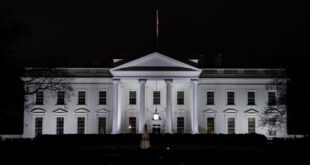
In one of the most unexpected political turns of the post-war Syrian landscape, Washington has hosted Ahmed al-Sharaa — formerly known as Abu Mohammed al-Joulani — signaling what may be the beginning of a new American chapter in Damascus. The meeting, quietly held at the White House with President Donald Trump, has raised profound questions about the reshaping of power and influence in Syria and the broader Middle East.
For decades, Syria was entrenched in the axis of resistance — a geopolitical block dominated by Tehran and Moscow. The regime’s survival during the brutal civil war depended on Iranian militias, Hezbollah fighters, and Russian airpower. But today, that paradigm appears to be cracking. The rebranding of al-Joulani into Ahmed al-Sharaa — a suit-wearing, Western-leaning figure now presented as Syria’s head of state — marks a symbolic but potent reversal of the narratives that once defined the Syrian conflict.
The United States, under Trump’s direct initiative, seems intent on reclaiming strategic ground lost to Russia and Iran. By welcoming al-Sharaa, the administration is testing whether Damascus can pivot away from Tehran’s orbit and align itself with the Western coalition against ISIS. In practice, Washington is signaling two messages: that Syria can be reintegrated into the global system, and that the price of such rehabilitation is total disengagement from Iranian and Russian influence.
Trump’s optics, however, were deliberate and restrained. Al-Sharaa was received without the traditional presidential protocol — no Oval Office handshake, no formal press event. The meeting was more an audition than a state visit. U.S. defense and intelligence agencies are reportedly evaluating whether al-Sharaa can deliver on counterterrorism cooperation, stabilize northern Syria, and prevent renewed Iranian entrenchment near Israel’s borders. The Israeli dimension remains central; no Syrian re-entry into Washington’s orbit is conceivable without Tel Aviv’s quiet approval.
Behind the scenes, Gulf diplomacy played a crucial role. Riyadh, Abu Dhabi, Doha, and Ankara all lobbied Washington to test a new formula: a Syria detached from both Assad and Iran, capable of returning to the Arab fold. It was during Trump’s Gulf tour in May that the first discreet encounter between al-Sharaa and the U.S. president occurred in Riyadh, paving the way for this unprecedented visit to Washington. The gesture was reciprocated by a partial suspension of the Caesar Act sanctions — a six-month “breathing space” for the Syrian economy and a tentative reopening of financial channels through SWIFT.
Yet this transformation remains fragile. The Syrian economy is devastated, reconstruction needs exceed $200 billion, and U.S. congressional opposition to normalization remains strong. Israel, meanwhile, remains wary of any empowered Syrian entity, fearing renewed regional assertiveness. Trump’s gambit may be less about Syria itself and more about demonstrating a cost-effective geopolitical “win” — extracting Syria from the Russian-Iranian axis and folding it into the anti-ISIS coalition at minimal expense.
For Syria, this is a probationary period — not a full rehabilitation. Al-Sharaa is under scrutiny to prove that his government can distance itself from Tehran, restrain Hezbollah, and restore internal stability without reigniting conflict. The next six months will determine whether this is a genuine shift in Middle Eastern alignment or simply another episode in Washington’s long experiment with regime engineering.
For now, Syria stands at a crossroads — between tactical normalization and strategic transformation. And the world watches, once again, as its fate is negotiated in foreign capitals.