April 29, 2026
Analysis, Briefs, Economics, Geopolitics, Middle East, Military & Security, NEWS, Op-ed, OPINION, Society
Two of Israeli Prime Minister Benjamin Netanyahu’s main rivals, Naftali Bennett and Yair Lapid, announced they will unite in the upcoming election to challenge his coalition government, mainly focusing on domestic issues like military conscription for the ultra-Orthodox. On broader issues such as Iran, Gaza, and Lebanon, their …
Read More »
April 29, 2026
Americas, Analysis, Briefs, Economics, Geopolitics, Middle East, Military & Security, NEWS, Op-ed, OPINION, Society
The latest Reuters/Ipsos poll paints a stark picture: the approval rating of Donald Trump has fallen to 34%, the lowest point of his current term. What began in January 2025 with a relatively solid 47% approval has eroded steadily, revealing not just political volatility, but a deeper crisis …
Read More »
April 29, 2026
Americas, Analysis, Briefs, Economics, Geopolitics, Middle East, Military & Security, NEWS, Op-ed, OPINION, Russia-CIS, Society
Hasnat Iqbal Diplomacy today is not solely conducted behind closed doors at summits or in the formalities of state visits. Abstract The emergence of digital technologies has reshaped how the states engage, exert influence and project voice internationally. Digital public diplomacy and nation branding have therefore emerged within …
Read More »
April 26, 2026
Americas, Analysis, Asia Pacific, Briefs, Economics, Geopolitics, NEWS, Op-ed, OPINION, Society
In the quiet coastal waters of the Taiwan Strait last week, a Japanese destroyer, the JS Ikazuchi, performed a maneuver that was less about navigation and more about necro-politics. For fourteen grueling hours, the vessel lingered in the sensitive waterway, timed precisely to coincide with the anniversary of …
Read More »
April 26, 2026
Americas, Analysis, Asia Pacific, Briefs, Economics, Europe, Geopolitics, Middle East, Military & Security, NEWS, Op-ed, OPINION, Russia-CIS, Society, Terrorism & Extremism
There is something telling about a smile in Washington. Not the ceremonial kind that accompanies routine diplomacy, but the carefully staged image of acceptance—the kind that signals a transaction already agreed upon behind closed doors. Reports of meetings between associates of Ahmed al-Sharaa and members of the United States Congress suggest more …
Read More »
April 26, 2026
Analysis, Briefs, Europe, Geopolitics, Middle East, Military & Security, NEWS, Op-ed, OPINION, Society
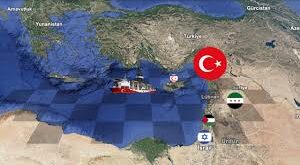
Hadi Elis For much of the past two decades, Turkish politics has been structured around internal antagonisms. The governing project of Recep Tayyip Erdoğan relied on mobilising domestic fault lines—most notably tensions with Kurdish movements and the secularist establishment—to consolidate power and reconfigure the republic’s ideological orientation. Today, however, that …
Read More »
April 26, 2026
Americas, Analysis, Asia Pacific, Briefs, Cybersecurity, Economics, Europe, Geopolitics, Middle East, Military & Security, NEWS, Op-ed, OPINION, Society, Terrorism & Extremism
Thomas Cavanna After 16 years in power, Prime Minister Viktor Orbán suffered a massive defeat in Hungary’s April 12 parliamentary election. Many observers have described the outcome as a stern ideological rebuke of the Trump administration, which lobbied heavily in Orbán’s favor, and have argued that Orbán’s defeat …
Read More »
April 26, 2026
Americas, Analysis, Asia Pacific, Briefs, Economics, Europe, Geopolitics, Military & Security, NEWS, Op-ed, OPINION, Russia-CIS, Society
Hridoy Sarkar America has engaged in yet another war in the Middle East through Operation Epic Fury, which began with the airstrikes on Iran on February 28 of this year. After the uncomfortable experiences of Iraq and Afghanistan, America tried to extricate itself from the Middle East and …
Read More »
April 26, 2026
Americas, Analysis, Asia Pacific, Briefs, Economics, Europe, Geopolitics, Middle East, Military & Security, NEWS, Op-ed, OPINION, Russia-CIS, Society
Mohammad Nosseir A conflict that has lasted nearly eight decades may require an approach different from the recurring cycles of war that all parties have pursued. The war in Gaza following the October 7 attack demonstrated that making life unbearable for Gaza’s civilians will not end this long-standing …
Read More »


 Geostrategic Media Political Commentary, Analysis, Security, Defense