Geostrategic Media Political Commentary, Analysis, Security, Defense

Hadi Elis
For much of the past two decades, Turkish politics has been structured around internal antagonisms. The governing project of Recep Tayyip Erdoğan relied on mobilising domestic fault lines—most notably tensions with Kurdish movements and the secularist establishment—to consolidate power and reconfigure the republic’s ideological orientation. Today, however, that paradigm appears to be shifting. Since October 2023, Ankara has increasingly reframed its political narrative around an external axis of confrontation, with Israel cast as the principal adversary.
This transition is neither accidental nor purely reactive. It reflects a deeper recalibration within Turkey’s political economy and strategic doctrine—one that aligns with both electoral imperatives and a broader ideological project often described as “neo-Ottomanism.”
The political utility of internal enemies
From his early political ascent, Erdoğan positioned himself against entrenched domestic forces: secular elites rooted in the Kemalist tradition and Kurdish political actors seen as challenging territorial and ideological cohesion. This internal “othering” served a dual purpose. It legitimised institutional transformation—particularly the weakening of secular military guardianship—and enabled the consolidation of executive authority.
The intellectual underpinnings of this approach can be traced to ideological currents inspired by figures such as Ziya Gökalp, whose blending of nationalism and religious symbolism has long influenced Turkish political thought. Erdoğan’s early conviction for reciting a poem associated with Gökalp—framing mosques as barracks and minarets as bayonets—symbolised the tension between secular constitutionalism and political Islam that would later define his rule.
Following the 1980 military coup, Turkey’s political environment became more accommodating to religious movements, partly as a bulwark against leftist ideologies. This laid the groundwork for the eventual rise of Islamist-oriented governance, culminating in the dominance of the AKP.
Regional projection and ideological ambition
Turkey’s internal consolidation was accompanied by an increasingly assertive regional posture. During the upheavals associated with the Arab Spring, Ankara sought to expand its influence by supporting aligned political movements, particularly those linked to the Muslim Brotherhood. In Syria, this translated into backing opposition factions, including elements operating under the banner of the Free Syrian Army.
Over time, Turkey’s involvement deepened, particularly in northern Syria, where it established a sustained military presence. The strategic rationale extended beyond regime change in Damascus; it encompassed territorial security concerns—especially regarding Kurdish autonomy—and broader ambitions to shape the post-conflict political order.
The Kurdish question remained central. Efforts to establish a buffer zone along Turkey’s southern border—often framed in security terms—also intersected with demographic and political calculations. Kurdish resistance, most notably in Kobani, disrupted these ambitions and underscored the limits of Ankara’s regional strategy.
Western entanglements and the reconfiguration of Syrian opposition
Turkey’s Syrian policy has also intersected with Western intelligence and diplomatic frameworks. Figures such as Richard Moore have acknowledged varying degrees of engagement with Syrian opposition actors, including attempts to rebrand and integrate certain factions into a post-Assad political landscape.
Subsequent diplomatic outreach to transitional authorities in Syria—by European governments, multilateral institutions, and even delegations from Washington—reflected a pragmatic, if controversial, effort to stabilise the country. Yet this process has also raised fundamental questions about legitimacy, governance capacity, and the long-term viability of externally supported political structures.
The inflection point: from inside out
The pivot from internal to external narratives accelerated following a critical development: the de-escalation of Turkey’s conflict with Kurdish militants. The March 2025 peace overture by Kurdish actors—seeking to end armed struggle—removed a longstanding domestic axis of mobilisation. In political terms, this created a vacuum.
In the absence of a galvanising internal threat, the logic of competitive authoritarianism—where regimes rely on polarisation to sustain legitimacy—necessitates the construction of new antagonisms. Israel has increasingly filled that role.
Israel as the new focal point
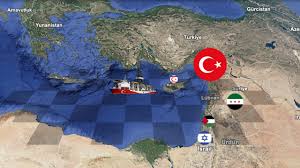
Since late 2023, Turkish leadership has escalated its rhetoric toward Israel, framing it not merely as a regional rival but as an existential threat. Statements by senior officials, including former Interior Minister Süleyman Soylu, have invoked scenarios of large-scale confrontation, with rhetoric extending to existential outcomes.
Erdoğan himself has repeatedly suggested that Turkey could project military power against Israel, drawing parallels with interventions in Libya and the South Caucasus. Meanwhile, Foreign Minister Hakan Fidan has sought to invert the narrative, portraying Israel as dependent on perpetual conflict to sustain its strategic posture.
This rhetorical escalation is not occurring in isolation. It coincides with broader regional tensions, including Israeli military actions in Syria and heightened confrontation with Iran. Ankara’s positioning thus reflects both opportunism and alignment with shifting regional dynamics.
Electoral calculus and strategic signalling
Turkey’s next presidential elections, scheduled for 2028, provide a crucial backdrop. In this context, externalising conflict serves a familiar political function: consolidating domestic support through nationalist mobilisation.
From a political economy perspective, this aligns with diversionary conflict theory, which posits that governments may amplify external threats to deflect attention from internal challenges—economic pressures, governance deficits, or declining popularity.
At the same time, such rhetoric carries real risks. Israel has demonstrated a low tolerance for perceived existential threats, and repeated Turkish statements—particularly when echoed by non-state actors in the region—may contribute to escalation dynamics that exceed Ankara’s original intent.
Ideology, identity and state transformation
Underlying these developments is a broader transformation in Turkey’s state identity. The shift from a staunchly secular republic toward a more overtly religious and nationalist framework has been gradual but unmistakable. References by senior figures, including First Lady Emine Erdoğan, to Turkey’s civilisational and even caliphal responsibilities reflect an evolving ideological narrative.
Whether this culminates in a formal redefinition of the state remains uncertain. What is clear, however, is that Turkey’s foreign policy is increasingly shaped by a synthesis of nationalism, political Islam, and strategic pragmatism.
The limits of externalisation
The central question is whether the external enemies paradigm can sustain itself. While it may offer short-term political dividends, it also introduces strategic vulnerabilities. Escalation with Israel—whether rhetorical or kinetic—risks entangling Turkey in conflicts that could undermine its economic stability and regional standing.
Moreover, the international system is less forgiving than domestic politics. Markets, alliances, and deterrence dynamics impose constraints that cannot be managed through rhetoric alone.
Conclusion: a precarious recalibration
Turkey’s shift from internal to external enemies reflects a broader recalibration of its political and strategic doctrine. It is a move shaped by ideological ambition, electoral necessity, and regional opportunity.
Yet it is also a high-risk strategy. By elevating Israel as the central adversary, Ankara is not merely redefining its foreign policy—it is testing the limit of its own power.
In an increasingly volatile Middle East, such tests rarely unfold as planned.