September 11, 2026
Africa, Americas, Analysis, Asia Pacific, Briefs, Economics, Europe, Geopolitics, Middle East, Military & Security, NEWS, Op-ed, OPINION, Russia-CIS, Society
The border issue in southern Lebanon was never merely a dispute over land or geographic lines. Throughout history, it has been a continuous path of Israeli attempts to encroach on national sovereignty and carve out parts of Lebanese geography. In 2000, following the defeat of the occupation, the …
Read More »
September 11, 2026
Briefs, Europe, Geopolitics, Middle East, Military & Security, NEWS, OPINION, Society
In its colonial history, Britain did not rely on military power alone. It early recognized the value of moral and legal language in wrapping its imperial interests. Terms such as “civilization” in India, “protection of international interests” in Egypt and the Suez Canal, and “civilization” in Africa, alongside …
Read More »
September 11, 2026
Americas, Analysis, Briefs, Economics, Europe, Geopolitics, Middle East, Military & Security, NEWS, Op-ed, OPINION, Society
Israeli Prime Minister Benjamin Netanyahu speaks to reporters in Jerusalem, September 8, 2026 (Reuters) For years, Benjamin Netanyahu, prime minister of the Israeli occupation government and leader of the right-wing Likud Party, presented himself to voters as the person capable of managing “Israel’s” relationship with the world from …
Read More »
September 11, 2026
Americas, Analysis, Asia Pacific, Briefs, Economics, Europe, Geopolitics, Middle East, Military & Security, NEWS, Op-ed, OPINION, Society
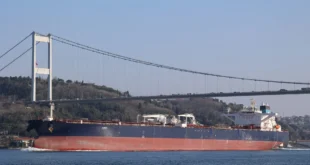
Shehab Al-Makahleh A Turkish crude oil tanker, Altura, crosses the Bosphorus Strait in Istanbul, Turkey, March 16, 2026 (Reuters) Turkey is redistributing its energy sources, a significant portion of which had been linked to Russia in recent years, benefiting from expanded options for purchasing oil and gas, increased …
Read More »
September 11, 2026
Americas, Analysis, Asia Pacific, Briefs, Caricature, Economics, Europe, Geopolitics, Middle East, Military & Security, NEWS, Op-ed, OPINION, Society
The Israeli government responded to Britain’s announcement the day before yesterday, Wednesday — a sharply worded statement accompanied by a package of sanctions against settlement — with a response that has become customary in Israel’s brutal temperament toward anyone who criticizes it or tries to limit its criminality: …
Read More »
September 11, 2026
Americas, Analysis, Asia Pacific, Briefs, Economics, Europe, Geopolitics, Middle East, Military & Security, NEWS, Op-ed, OPINION, Society, Terrorism & Extremism
By Dan Steinbock The collision of an aging population, escalating climate damages, and massive remilitarization is set to present an unprecedented, compounding threat to the future well-being of Europeans. On August 27, 2026, European Commission (EC) President Ursula von der Leyen gave a speech in Paris noting that …
Read More »
September 11, 2026
Americas, Analysis, Briefs, Economics, Europe, Geopolitics, Middle East, Military & Security, NEWS, Op-ed, OPINION, Society
By Eng. Saleem Al-Batayneh Hearing is not merely sound reaching the ears — it is the ability to distinguish words and understand their meanings. The world around us has changed, and our current level of anxiety and fear no longer allows us to take a single step forward …
Read More »
September 11, 2026
Analysis, Briefs, Geopolitics, Middle East, Military & Security, NEWS, Op-ed, OPINION, Society
Mazen Al Najjar The greatest challenge facing the West is adapting to a new distribution of global power: how can peace and order be achieved in a world after Western hegemony? One of the most fundamental questions in any social system is how order can be established by …
Read More »
September 7, 2026
Analysis, Asia Pacific, Briefs, Cybersecurity, Economics, Geopolitics, Middle East, Military & Security, NEWS, Op-ed, OPINION, Society
Dr. Ju Hyung Kim Recent footage from Yemen should be taken seriously by South Korea’s defense industry. In August, Houthi media released a video claiming that a Rajum multirotor drone dropped a munition on Saudi Arabia’s M1A2S Abrams tank near Marib. The ammunition appeared to hit the rear …
Read More »


 Geostrategic Media Political Commentary, Analysis, Security, Defense