Geostrategic Media Political Commentary, Analysis, Security, Defense

Sara Ross
The reported threat by President Donald Trump to “devastatingly bomb” Oman if Muscat were to obstruct his efforts to end the war with Iran is more than another provocative statement in an increasingly volatile conflict. It exposes a serious strategic contradiction at the heart of Washington’s Middle East policy: the United States is simultaneously asking Oman to help de-escalate the confrontation with Iran while threatening the very country whose diplomatic channels may be essential to achieving that objective.
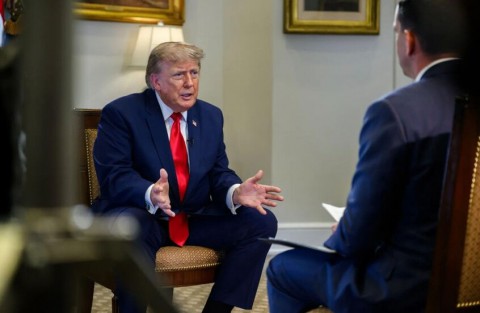
The reported comments, attributed to Trump in an August 17 exchange with a Fox News reporter, should therefore be taken seriously—not because every presidential threat necessarily becomes policy, but because threats directed at a friendly Gulf state can have consequences far beyond the words themselves. They can undermine mediation, unsettle American partners, raise questions about the reliability of U.S. commitments and encourage regional governments to conclude that even close relationships with Washington do not guarantee protection from American coercion.
First, threatening Oman contradicts the strategic objective Washington says it wants to achieve
The administration’s stated objective is to end the war with Iran and restore stability to the region. If that is genuinely the objective, threatening Oman makes little strategic sense.
Oman has historically maintained channels of communication with actors that Washington has sometimes found difficult to engage directly. Muscat’s diplomatic value lies precisely in its ability to communicate with different sides without publicly presenting itself as an extension of any one of them. In a confrontation as sensitive as the current U.S.-Iran crisis, that function becomes particularly important.
Diplomacy requires intermediaries that both sides trust sufficiently to deliver messages, explore compromises and test possible arrangements without forcing either government to make immediate public concessions. Threatening such an intermediary risks destroying the very diplomatic infrastructure needed to end the conflict.
A country cannot simultaneously ask a mediator to negotiate and threaten to bomb it.
That is not coercive diplomacy. It is strategic incoherence.
Second, Oman is not an enemy of the United States
This point should be obvious, but it needs to be stated clearly.
Oman is a long-standing U.S. partner in the Gulf and has maintained close defense and diplomatic relationships with Washington. Its foreign policy has traditionally emphasized neutrality, dialogue and mediation rather than confrontation.
That makes Muscat fundamentally different from Tehran.
If Washington disagrees with Oman’s diplomatic position, it has numerous instruments available: private consultations, diplomatic pressure, intelligence coordination, economic discussions and direct negotiations. Military threats against Oman should be regarded as an extraordinary escalation because they transform a disagreement with a partner into a potential security crisis.
The broader message to other American partners would also be deeply damaging.
If Oman can be threatened while attempting to mediate between Washington and Tehran, what confidence should other regional partners have that their neutrality or independent diplomacy will be respected?
Third, the Strait of Hormuz makes Oman’s role even more important
The strategic importance of Oman becomes clearer when the Strait of Hormuz is considered.
The Strait is one of the world’s most important energy chokepoints, connecting the Persian Gulf with the Gulf of Oman and the wider Indian Ocean. Any sustained disruption affects energy prices, shipping costs, insurance premiums and inflation far beyond the Middle East.
Oman sits alongside this strategic maritime environment and has an obvious interest in keeping regional shipping lanes open.
Muscat therefore has every reason to seek a diplomatic solution that restores maritime stability.
If Omani officials are communicating with Iran about reopening the Strait, that should be viewed in Washington as a diplomatic opportunity rather than a hostile act.
The objective should be to use Oman’s channels to reduce tensions—not to threaten the country facilitating those channels.
Fourth, the threat reveals the danger of confusing pressure with strategy
There is an important distinction between coercion and strategy.
Coercion can be useful when it is calibrated, credible and directed toward a realistic political objective. But threats become counterproductive when they undermine the coalition or diplomatic environment necessary to achieve that objective.
Threatening Oman risks producing exactly the opposite of what Washington needs.
Rather than persuading Tehran to compromise, it could encourage Iran to conclude that Washington is unwilling to tolerate independent regional diplomacy. Rather than strengthening America’s Gulf partnerships, it could encourage regional governments to diversify their security relationships and reduce dependence on Washington.
And rather than lowering energy prices, a threat against Oman could increase uncertainty in an already fragile maritime environment.
In other words, a statement intended to demonstrate American strength could ultimately demonstrate American unpredictability.
Fifth, the credibility of American alliances is at stake
For decades, one of the principal sources of American influence in the Middle East has been the perception that Washington is a reliable security partner.
That perception matters enormously.
Military power is only one component of an alliance. The other is predictability. Governments must know what Washington considers unacceptable, what it is willing to defend and how it will respond to disagreement.
If American partners begin to believe that diplomatic disagreements can suddenly produce presidential threats of military action, the foundations of regional trust begin to weaken.
This is particularly important at a moment when Gulf states are increasingly pursuing diversified foreign policies.
Saudi Arabia, the United Arab Emirates, Qatar and Oman have all developed relationships with China and other major powers while maintaining important ties with Washington. This is not necessarily an effort to replace the United States. It is a strategy of hedging—ensuring that no single external power possesses overwhelming leverage over their national security.
An unpredictable American policy could accelerate that trend.
Sixth, Washington should learn the difference between an ally and a subordinate
One of the recurring problems in American Middle East policy is the assumption that strategic partnership requires political obedience.
It does not.
Allies have interests of their own.
Oman has its own national-security calculations, its own relationship with Iran and its own interpretation of regional stability. Those interests will sometimes overlap with Washington’s and sometimes diverge from them.
That is normal.
A mature alliance is not one in which one country gives instructions and the other obeys. It is one in which both sides can disagree without questioning the fundamental relationship.
If Washington expects Gulf partners to function as subordinate actors rather than sovereign states, it will eventually discover that partnership becomes increasingly difficult to sustain.
Seventh, the credibility of Washington’s Iran policy is already under pressure
The reported threat against Oman also comes at an especially sensitive moment because the United States has repeatedly presented the possibility of a diplomatic settlement with Iran while simultaneously threatening further military escalation.
The contradiction is becoming increasingly visible.
One day Washington emphasizes negotiations; another day it threatens military action. One moment officials discuss de-escalation; the next, rhetoric escalates. The result is an environment in which neither allies nor adversaries can easily determine what Washington’s actual end state is.
That uncertainty is dangerous.
A successful strategy requires a clearly defined objective.
Does Washington want regime change? A nuclear agreement? Freedom of navigation? The destruction of Iranian military capabilities? A broader regional settlement? Or simply the restoration of deterrence?
These are different objectives requiring different strategies.
Without clarity about the end state, military pressure can become an end in itself.
Eighth, the Trump administration should be careful about the politics of humiliation
There is another strategic principle that Washington would do well to remember: governments rarely make major concessions when they believe those concessions will be interpreted domestically as surrender.
This applies to Iran, but it also applies to Oman and America’s other regional partners.
Threatening a sovereign country publicly can make compromise politically more difficult because the targeted government must demonstrate that it cannot be intimidated.
Diplomacy works best when governments have enough political space to compromise without appearing to capitulate.
If Washington genuinely wants Muscat to help negotiate with Tehran, it should give Oman political room to perform that function.
A mediator cannot operate effectively while being publicly threatened by one of the parties to the dispute.
Ninth, the real American interest is not domination of the Gulf but stability in the Gulf
The United States has a legitimate interest in freedom of navigation, stable energy markets and the security of its regional partners. But these objectives do not require Washington to control every diplomatic decision made by Gulf governments.
Indeed, American interests may be better served by encouraging regional diplomacy.
A stable Gulf in which Oman can communicate with Iran, Saudi Arabia can maintain its own diplomatic channels, Qatar can mediate when necessary and the UAE can pursue its economic interests is ultimately more valuable to Washington than a region in which every state waits for instructions from the White House.
The objective should be regional stability supported by American power, not regional dependence on American power.
That distinction will become increasingly important as the international system becomes more multipolar.
Tenth, America’s credibility cannot be rebuilt through threats alone
The United States remains the world’s most powerful military actor, but military power does not automatically translate into diplomatic credibility.
American influence ultimately rests on a combination of hard power, economic power, technological leadership, alliances and soft power.
Threatening partners unnecessarily can weaken several of these simultaneously.
It can damage trust with allies, encourage hedging, complicate diplomacy and make America’s adversaries more willing to exploit divisions between Washington and its partners.
The United States therefore has an interest in demonstrating not only that it can use force, but that it knows when not to use it.
That is the real test of strategic power.
Oman should be treated as a diplomatic asset, not a target
The irony is difficult to ignore.
At a time when Washington needs channels to Tehran, Oman may be one of the countries best positioned to provide them.
At a time when the United States wants the Strait of Hormuz reopened, Oman has a direct interest in maritime stability.
At a time when Washington wants its Gulf partnerships to remain strong, Oman represents a model of independent regional diplomacy that has historically complemented rather than undermined American interests.
For all these reasons, threatening Oman is strategically counterproductive.
The United States should be encouraging Muscat to communicate with Tehran, not warning it against doing so.
Conclusion: Strength Requires Restraint
The most consequential question is not whether Trump can threaten Oman. Of course the United States possesses overwhelming military capabilities. The question is whether using such rhetoric advances American interests.
It does not.
If Washington wants the war with Iran to end, it needs diplomacy. If it wants the Strait of Hormuz reopened, it needs regional cooperation. If it wants Gulf states to remain reliable partners, it needs to demonstrate that partnership allows room for sovereign decision-making. And if it wants to deter Iran, it needs a strategy that distinguishes between an adversary and a mediator.
Oman should be part of the solution, not treated as part of the problem.
The United States does not strengthen its position in the Middle East by threatening every actor that refuses to follow its preferred script. It strengthens its position by making its allies confident, its adversaries cautious and its diplomatic partners useful.
The strongest message Washington could send to Oman is therefore not a threat of bombing, but a reaffirmation that diplomacy remains possible.
In the Middle East, where one miscalculation can turn a political crisis into a regional war, that distinction is not rhetorical.
It is strategic.