Geostrategic Media Political Commentary, Analysis, Security, Defense

J. Morgan
Turkey and Israel do not appear, at least for now, to be willing to test the limits of their military power against each other inside Syria. Yet recent developments suggest that the two countries are moving steadily closer to a more dangerous zone in which strategic miscalculation could produce consequences neither side originally intended. Israel is attempting to prevent the emergence of a Turkish military presence that it regards as a potential future threat, while Ankara is seeking to expand its influence in Syria without giving Tel Aviv a justification to move from warnings and preventive measures toward direct confrontation. The result is an increasingly delicate security equation in which both sides are trying to establish red lines without crossing the threshold that could turn Syria into an arena for an Israeli-Turkish conflict.
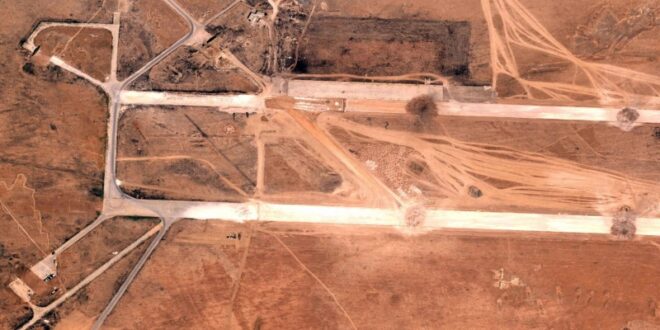
The Israeli strike on the Abu al-Duhur military airport in northwestern Syria should therefore be understood as more than another Israeli attack against a Syrian military facility. The strike came after a Turkish delegation visited the site, while Israeli sources indicated that the objective was to prevent the establishment or development of a Turkish military presence there. Ankara, for its part, denied that Turkish military personnel were stationed at the facility either before or during the attack. The significance of Abu al-Duhur lies precisely in the timing. Israel did not wait for a fully operational Turkish base to emerge or for Turkish troops to be publicly deployed. Instead, it acted when it perceived indications that the facility could become part of a broader military infrastructure supported by Ankara. This represents an increasingly important feature of Israeli strategy in post-Assad Syria: acting against a potential military threat before it becomes an established one.
That approach reflects a broader transformation in Israeli behavior inside Syria since the fall of Bashar al-Assad. Israel has repeatedly argued that it must prevent the emergence of military capabilities that could eventually threaten its security. From this perspective, the destruction of military installations, weapons depots and strategic infrastructure is not necessarily intended to initiate a conventional war but to prevent the consolidation of a new military balance. Abu al-Duhur therefore appears less like an attempt to confront Turkey directly and more like a carefully calibrated political and military message to Ankara. The Israeli message is that the reconstruction of Syrian military capabilities, particularly when supported by Turkey, cannot take place independently of Israeli security calculations. Israel is signaling that it is prepared to use force if it believes Turkish-backed military infrastructure could eventually alter the regional balance or create a new strategic threat along its northern frontier.
Turkey’s response has also been carefully calculated. Ankara denied the presence of its forces at the facility and condemned the Israeli strike as damaging to Syrian stability, but it did not respond with direct military action against Israel. This restraint is significant. Turkey’s objectives in Syria extend well beyond the establishment of military bases. Ankara wants to influence the reconstruction of Syrian state institutions, strengthen Syrian security and military structures, address the Kurdish question, protect its border and establish itself as one of the principal external powers shaping Syria’s post-Assad political order. A retreat in the face of Israeli pressure would carry political costs for President Recep Tayyip Erdoğan, particularly given Turkey’s aspirations to be recognized as a decisive regional power. Yet a direct military confrontation with Israel would carry far greater strategic risks.
The real danger would emerge if Israel moved from striking a Syrian facility believed to be capable of hosting Turkish forces to deliberately targeting a location where Turkish personnel were actually present. That would fundamentally change the equation. The death of Turkish soldiers in an Israeli attack would not simply be another incident in the Syrian conflict. It could generate enormous domestic pressure on Ankara to respond and could sharply narrow the Turkish government’s room for diplomatic maneuver. Former U.S. ambassador to Syria Robert Ford has warned that a military confrontation between Turkey and Israel cannot be ruled out and that an Israeli attack resulting in Turkish casualties could trigger a Turkish military response. Israel is likely to understand this threshold as well. Ankara may be able to absorb an attack against Syrian infrastructure, but it would find it considerably more difficult to contain the political consequences of Israeli forces killing members of the Turkish armed forces.
This is where the current confrontation becomes particularly dangerous. The question would no longer be simply whether Turkey wants a war with Israel. It would be whether the Turkish government could politically afford not to respond after Turkish soldiers had been killed. Erdoğan would face a difficult strategic calculation. Military retaliation could reinforce Turkey’s image as a regional power capable of defending its forces and sovereign interests, but it could also initiate a confrontation with a technologically advanced Israeli military and potentially involve the United States and other external actors. Failure to respond, however, could create the opposite perception: that Israel possesses the ability to impose its red lines inside Syria without paying a meaningful price. In Turkish domestic politics, where nationalism and the status of the armed forces remain powerful political factors, the death of Turkish soldiers at Israeli hands could become far more consequential than the destruction of a Syrian military facility.
This is why the current situation is better understood as a form of strategic brinkmanship than as an inevitable prelude to war. Both Turkey and Israel have incentives to establish limits, but both also have incentives to avoid crossing the most dangerous ones. Israel wants to ensure that Syria does not become a platform for a Turkish military architecture that could constrain Israeli freedom of action. Turkey wants to consolidate its influence over Syria without becoming embroiled in a direct military confrontation with Israel. The paradox is that the very policies designed to prevent a future confrontation could gradually make such a confrontation more likely. Preventive strikes can eliminate threats, but they can also create new political grievances, particularly when they are perceived by the targeted state as an attempt to dictate the limits of its sovereignty and regional influence.
The United States is therefore confronted with a particularly difficult dilemma. Washington regards both Turkey and Israel as important partners, despite the deterioration in their bilateral relationship. A direct confrontation between two U.S.-aligned regional powers would undermine American efforts to stabilize post-Assad Syria and could transform the country into another arena for competing regional military projects. U.S. officials have consequently sought mechanisms to prevent friction among Israel, Turkey and Syria. The American concern is fundamentally different from Israel’s. Israel is primarily concerned with preventing the emergence of a potential military threat, whereas Washington has a broader interest in preventing its partners from turning Syria into a new battlefield. The difference matters because Washington may increasingly find itself trying to restrain an Israeli policy that views preventive action as essential to national security.
For Ankara, the Syrian theater is also becoming increasingly complicated. Turkey does not want Israel to determine the limits of Turkish influence in Syria, but neither does it want to allow Israeli actions to drag it into a war. The Turkish leadership therefore has an incentive to maintain strategic ambiguity: supporting Syria’s reconstruction and security institutions, maintaining its political influence, and strengthening its position without establishing military arrangements that Israel could portray as an immediate threat. Israel, meanwhile, has an incentive to maintain ambiguity of its own by striking Syrian infrastructure associated with potential threats while avoiding direct attacks on Turkish personnel. This mutual caution is what has so far prevented the situation from escalating into an Israeli-Turkish military confrontation.
Yet ambiguity has its limits. Military deployments, intelligence assessments and political red lines rarely remain perfectly synchronized. A site that appears empty today may contain personnel tomorrow. A reconnaissance mission may be interpreted as preparation for a military deployment. A warning intended for Ankara may be interpreted as an attack on Turkish sovereignty. And a strike intended to prevent escalation may ultimately produce precisely the escalation it was designed to prevent. The danger therefore lies less in a deliberate decision by either government to start a war than in the accumulation of smaller decisions that progressively reduce the space for compromise.
The Abu al-Duhur episode illustrates this danger particularly well. If Israel strikes equipment or a Syrian facility before Turkish forces arrive, Ankara may be able to absorb the incident through diplomatic channels. If an Israeli strike kills Turkish personnel, however, the political calculus changes dramatically. The issue would immediately move from Syrian sovereignty and Israeli threat perception to Turkish national honor, military credibility and the government’s responsibility to protect its soldiers. At that point, the question would no longer be whether Turkey wants a confrontation with Israel. The question would be whether Ankara could prevent one after domestic political pressures made retaliation appear necessary.
Syria has consequently become one of the most sensitive arenas in the emerging regional order. The country is no longer merely a battleground between the remnants of the old Syrian conflict and competing local actors. It is increasingly becoming a meeting point for the strategic interests of Turkey, Israel, Iran, Arab states, Russia and the United States. The collapse of the old Syrian security architecture has created a vacuum in which several powers are attempting to shape the institutions, military structures and borders of the new Syria. Turkey and Israel are among the most consequential actors in this process, but their interests increasingly overlap geographically while diverging strategically.
The central question, therefore, is not whether Turkey and Israel currently want war. They probably do not. The more important question is whether they can continue competing for influence in Syria without allowing tactical decisions to create an irreversible strategic crisis. For now, both governments appear to understand the enormous costs of direct confrontation and are therefore exercising restraint. But restraint cannot be taken for granted. As Israel continues its policy of preventing potential threats before they mature, and as Turkey continues to deepen its role in Syria, the distance between the two countries’ red lines may become increasingly narrow. The greatest danger is that the next strike will not hit an empty facility, but a place where Turkish soldiers are present. If that happens, the Syrian theater could become the point where a carefully managed strategic rivalry between two regional powers unexpectedly turns into a direct confrontation.