Geostrategic Media Political Commentary, Analysis, Security, Defense

Lama Al-Rakad
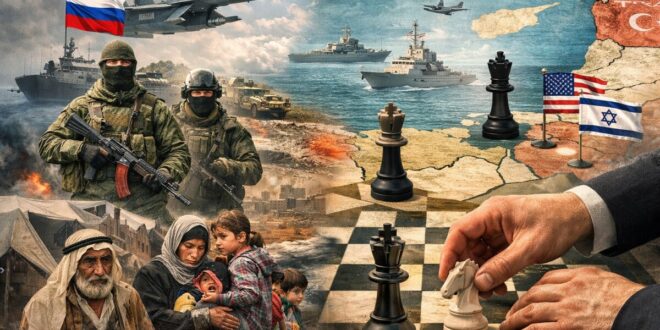
Russia’s recent strategic moves in the Eastern Mediterranean, particularly in coastal areas, highlight a recurring pattern in geopolitics: powers that neglect to empower local populations often achieve only temporary gains. Using George Friedman’s analytical framework, this article examines how Russia’s reliance on direct military and economic influence, without building sustainable local networks, may leave it vulnerable to long-term power loss, especially in regions with strategic resources and politically marginalized populations.
1. Introduction: Geography, Demography, and Power
George Friedman argues that geography and demography determine the limits and potential of power. Populations are not merely numbers; they represent points of influence, control, and stability. In regions where local communities are weak or excluded from governance, external powers struggle to maintain their influence over time.
The Eastern Mediterranean, with its strategic coastlines, significant maritime resources, and historically marginalized populations, is a prime example of this challenge. Although Russia possesses temporary military and economic leverage, the weakness of the local population and their exclusion from managing their own resources makes the situation extremely fragile.
2. Short-Term Gains and Russia’s Strategic Shortcomings
Recent developments indicate that Russia has achieved some strategic gains:
• A military presence at key coastal locations.
• Partial control of ports and infrastructure.
• Limited influence over some local factions.
However, these gains rely heavily on direct force and short-term agreements, without building a sustainable network of local allies who possess relative autonomy and genuine economic interests. This approach repeats a historical pattern: powers that rely solely on coercion gradually lose influence, especially if rival regional powers or the local community itself mobilize.
3. Regional Dynamics and the Risk of Erosion
Several factors increase the fragility of Russian influence:
1. Weak Local Populations: Marginalized and economically disadvantaged communities are less able to sustainably support external powers.
2. The Rise of Rival Regional Powers: Turkey and Iran are poised to exploit any vacuum or influence local factions.
3. Strategic Resources: Natural gas and seaports increase competition and make Russian influence precarious.
According to Friedman, long-term control in these areas requires integrating local populations into an economic and political network that secures their loyalty and stability.
4. Lessons from History and Theory
● Powers that rely solely on coercion face a gradual erosion of influence despite initial gains.
● Resource-rich regions attract regional and international rivals, making local alliances essential for maintaining influence.
● Empowering local populations economically and politically is key to transforming temporary influence into sustainable power.
5. Recommendations for Sustainable Influence
Applying Friedman’s ideas, Russian influence in the Eastern Mediterranean needs to:
1. Invest in local governance and population capabilities: Empower marginalized communities to build a strong support network.
2. Balancing military power with economic and social ties: Military control alone is insufficient.
3. Preparing for regional power moves: Developing strategies to counter potential Turkish and Iranian influence.
Without these changes, Russian influence may be short-lived, with the risk of losing ports and strategic interests within a decade.
6. Conclusion: The situation in the Eastern Mediterranean illustrates a broader geopolitical reality: Short-term direct power is not a substitute for building sustainable local networks. Current Russian gains could evaporate if local populations are not integrated and lasting economic and political alliances are not forged—a lesson applicable to conflict zones worldwide.
About the Author:
Lama Al-Rakad is a Syrian Journalist and Media Expert.