Geostrategic Media Political Commentary, Analysis, Security, Defense

Lexy Reid
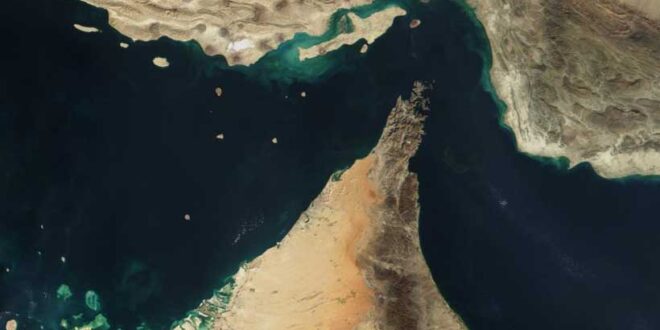
20% of the world’s oil passes through the Strait of Hormuz, a small chokepoint whose use is now being massively disrupted by war, drone strikes and the competing interests of great powers. The current Iran War has transformed the Strait of Hormuz from a potential risk into a genuine systemic crisis. Much like the Suez Crisis in 1956, its closure forces an international reckoning with both perceptions of who truly holds power in the global order and with the overall efficacy of our energy supply system.
Suez Parallels and Differences
The Suez Crisis was a regional military failure from France and the UK. The conflict, pivotal in the Cold War, was triggered by Nasser’s (Egyptian President) nationalisation of the Suez Canal in an assertion of sovereignty. The secret military invasion launched by Britain, France and Israel in response was forced to withdraw due to intense diplomatic and economic pressure from the US. This affair showed that Britain’s imperial glory days were at an end, and the US announced itself as the new Western superpower arbiter of Middle Eastern affairs.
Contemporarily, the Strait is performing a similar revealing function – the crisis does not create shifts in the balance of power, it just exposes shifts that are already underway. The Strait and the Suez both involve a declining hegemon’s credibility being tested – overstretched, internally divided, acting unilaterally and alienating allies. Both crises have also triggered a scramble among outside powers; notably, NATO allies have been persistently reluctant to provide substantive support to the US. Both crises centre on a physical chokepoint, the control of which is inseparable from the global economy. Whoever controls the waterway has leverage over every importing nation.
This being said, the two crises are not identical. The Suez case was resolved relatively quickly and cleanly, while the closure of the Strait has no obvious resolution pathway. Further, Iran, unlike Nasser’s Egypt, faces existential military pressure. Nasser retained state sovereignty and ultimately won politically despite military loss. Dissimilarly, Iran’s leadership is being systemically attacked by the US-Israel coalition, and is unlikely to attain a global political win due to general international condemnation of its brutal regime. Moreover, the stakes of today’s crisis are much higher: Suez impacted European oil, but the Strait affects global LNG, Asian manufacturing supply chains and food commodity prices all at the same time. The Suez Crisis is a useful analytical comparison tool to compare hegemonic declines, but is an imperfect mirror to the scrambled roles and multiplied risks involved in Hormuz’s closure.
Who Controls the Strait?
The first model through which to view Hormuz control outcomes is one of US-dominated security. Since the Carter Doctrine in 1980, the US has guaranteed Gulf security as the cornerstone of the liberal international economic order – and has not shied away from varying degrees of intervention to achieve this security. The 2026 war represents an aggressive expression of this doctrine, but, perhaps, also the doctrine’s destruction. The US has become the belligerent, self-interested aggressor disrupting the Strait, rather than the security guarantor the doctrine posits them as. 2,000 vessels are stranded, oil prices are surging, allies are highly unnerved. France’s maritime negotiation around, rather than in tandem with, Washington may signal a crisis of credibility as a neutral protector. Continued strikes from the US and Israel suggest that Trump intends a settlement by force. If successful, this is certainly US-dominated control. However, both positive and normative questions come into play in this scenario: is a coercively opened Strait a secure Strait? Is a US-controlled Strait a desirable outcome considering the democratic backsliding the world is currently witnessing within the nation?
A second possible control model involves Iranian leverage and the costs of sovereignty. Iran has already begun charging vessels for safe passage through the Strait, a direct assertion of sovereign control which echoes Nasser’s nationalisation of the Suez Canal Company. Iran’s five-point plan explicitly demands “exercise of sovereignty over the Strait of Hormuz” – this is a statement of strategic intent, not a changeable negotiating position. Even a degraded Iran, enduring ceaseless military attacks, retains the capacity to threaten the Strait through mines, drone swarms and coastal missiles, since military loss does not automatically mean the loss of chokepoint leverage – especially while the Iranian Regime keeps recovering from leadership murders. The danger here is that Iran may use the Strait not to permanently close it (this would be economically suicidal), but as a permanent toll road and coercive instrument. This would be a kind of armed neutrality, forcibly extracting rents from global trade.
A final model is a multilateral, China-backed international escort system – the most structurally significant option. China imports around 40% of its oil through the Strait, thus has an overwhelming economic incentive to internationalise security – rather than let their American economic rival take complete coercive control. Both China and France have been pushing for diplomacy, with Pakistan mediating, so the architecture of a multilateral alternative is forming in real time. The EU’s Operation Atalanta (anti-piracy off the coast of Somalia) has set a precedent for multilateral maritime security arrangements when great powers work together. A China-backed escort system would be the most dramatic signal of post-American order, with Beijing taking on Washington’s stabilising role.
Looking at all three models, the most likely near-term outcome is contested ambiguity: US military presence, continued Iranian harassment and growing multilateral pressure forming an unstable, tense triangle. The more important question remains unanswered; which model, if any, will consolidate after the war ends?
Does This Signal a Post-American Order?
The US has spent global political capital which it simply cannot recover. Allies from Canada to the entire Global South have condemned or distanced themselves from US overreach, and refused to provide military support across the board. The unilateral decision to attack during ongoing nuclear negotiations and the subsequent inability to achieve either clean regime change or a swift deal displays the textbook symptoms of neo-imperialist overstretch. If China emerges as the architect of Strait stabilisation, the symbolic inversion is complete: the US broke the world order and China had to fix it – this is a far more powerful signal than any shaky and contested military victory. Moreover, if the US pursues a rushed deal with Tehran’s leadership, it will confirm the limits of US power. They would have haemorrhaged massive military expenditure for an outcome not fundamentally different from what diplomacy could have achieved.
This being said, a post-American order does not mean a Chinese order. China’s naval capacity in the Gulf remains limited: it has no bases, no Gulf alliance structure and no institutional framework comparable to US CENTCOM. The dollar’s role in oil pricing, US carrier groups and the sheer depth of US-Gulf bilateral security agreements mean structural US dominance persists even if its political legitimacy is damaged. Notably, Britain “lost” the Suez crisis, but remained a major power for decades. Decline isn’t usually a single moment, it is more often a process which crises can then accelerate. A damaged, defensive, internally fragmented America who retains dominance, but not hegemony, by default is more likely than a complete international political failure.
Conclusion
The Strait is comparable to Suez not in terms of military defeats, but in terms of legitimacy crises, forcing a reordering of assumptions and rankings. The chokepoint question leads into the order question, since whoever stabilises the Strait decides the next phase of international security architecture. While the Strait crisis is still live, the direction it is forcing the world to travel in (to a more multipolar, contested, transactionally ordered world) seems difficult to reverse.