Geostrategic Media Political Commentary, Analysis, Security, Defense
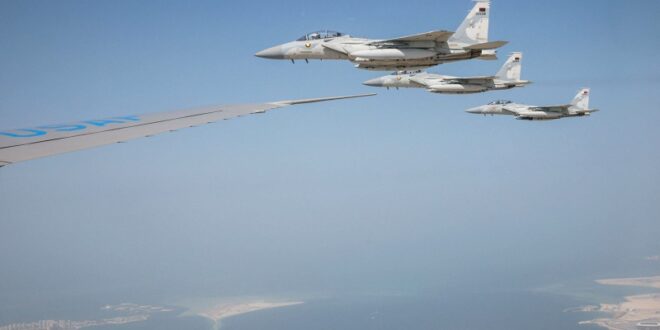

Qatar is pursuing two parallel tracks in an increasingly turbulent regional environment: diplomacy on the one hand and security fortification on the other. While Doha continues to present itself as a player capable of opening channels for dialogue, mediation, and de-escalation, it is simultaneously expanding its network of defence partnerships, foremost among them its relationship with the North Atlantic Treaty Organization (NATO).
This equation is gaining new momentum with the agreement between Qatar and NATO to bring the Individual Tailored Partnership Programme (ITPP) into effect, strengthening political, defence, and security cooperation between the two sides, enhancing operational compatibility and interoperability, and opening broader avenues for joint action.
The move does not appear to be isolated from the transformations taking place across the region. Rather, it forms part of a wider trajectory aimed at developing the security partnership between NATO and the Gulf states at a time when risks associated with missiles, unmanned aerial systems, maritime security, and the protection of critical infrastructure are increasing.
The significance of the Individual Tailored Partnership Programme lies in the fact that it is not merely a political declaration, but a framework that organizes different dimensions of cooperation between NATO and its partner according to clearly defined priorities and objectives. NATO describes it as its principal instrument for coordinating cooperation with partner countries, bringing together various programmes and mechanisms of cooperation within a single strategic framework that defines objectives, means, and joint activities.
For Qatar, this framework means moving its relationship with NATO toward a more structured and clearly defined level, with greater emphasis on interoperability, training, capacity-building, and security coordination.
Doha announced in July that an agreement had been reached on the programme, while simultaneously emphasizing the importance of developing cooperation with the Alliance under the Istanbul Cooperation Initiative (ICI), which provides the framework connecting NATO with its Gulf partners. Qatar also confirmed that the establishment of a regional centre in Qatar to support peace operations under NATO auspices was approaching its final stage.
But the more important message Qatar is sending concerns not defence cooperation alone, but how soft power can be combined with strategic security hedging.
The Qatari Foreign Ministry has stressed that diplomacy remains the most effective avenue for resolving conflicts and that Doha maintains open channels of communication even during periods of escalation, drawing upon its role in mediation, conflict prevention, and peacebuilding. At the same time, it has emphasized the importance of strengthening cooperation with NATO in capacity-building and addressing shared security challenges.
This is where Qatar’s strategic philosophy becomes apparent: mediation does not require withdrawal from the architecture of power, and security partnerships do not require abandoning diplomacy.
Rather, Doha appears to be attempting to turn these two roles into complementary instruments. A state that seeks to mediate conflicts also requires a stable security environment capable of protecting its interests and giving it greater resilience in the face of the consequences of regional escalation.
NATO, for its part, appears increasingly to view cooperation with Qatar and its Gulf partners within a broader security calculus.
At the Alliance’s summit in Ankara in July, NATO launched four major projects with its Gulf partners covering maritime security, countering unmanned aircraft and systems, protection against chemical, biological, radiological and nuclear threats, and counterterrorism. The Alliance emphasized that these projects are intended to strengthen multilateral cooperation and adapt to an evolving security environment.
These areas are at the heart of the Gulf states’ security requirements as the protection of critical infrastructure, trade and energy routes, and maritime corridors assumes increasing importance. At the same time, the growing threat posed by drones has demonstrated their ability to transform the character of modern warfare.
Within this context, cooperation with NATO gives Qatar additional opportunities to develop capabilities, training, and interoperability without implying that the country is seeking NATO membership or surrendering the independence of its political decision-making.
Qatar occupies a position that makes it central to the regional security equation. It hosts major American military infrastructure and maintains extensive defence relationships with Western powers, while simultaneously preserving relations and channels of communication with diverse actors across the region.
This distinctive position gives Doha considerable diplomatic room for manoeuvre, but it also exposes the country to the repercussions of any major deterioration in regional security.
For this reason, strengthening the partnership with NATO can be interpreted as an attempt to increase state resilience against regional shocks, rather than simply as a reaction to any single crisis.
Doha is not constructing its security strategy around one adversary alone. Instead, it is expanding its strategic options in an environment where threats can change rapidly—from energy and maritime security to drones and the protection of critical infrastructure.
The Qatari move also carries a dual message. To its Western allies, Doha is signalling that it is prepared to deepen security and institutional cooperation. To regional actors, it is making clear that it does not intend to leave its security at the mercy of shifting political balances.
But the deeper message is that Qatar is seeking to preserve its strategic room for manoeuvre.
Security engagement with NATO does not cancel Qatar’s relationship with the United States, its mediation role, or its channels of communication with different regional actors. On the contrary, it could theoretically give Doha greater capacity to act as a mediator while simultaneously possessing a more sophisticated security network.
This equation is consistent with Qatar’s foreign-policy approach over recent years, which has emphasized expanding relationships rather than confining the country to a single strategic axis.
Ultimately, Qatar does not appear to be choosing between being a mediator and being a state with robust security arrangements. It is attempting to be both.
In a region where security crises and political conflicts increasingly overlap, diplomatic influence alone is no longer sufficient, just as military power alone cannot produce stability. Doha therefore appears convinced that the most effective way to protect its role and interests is to construct a combination of mediation, deterrence, and international partnerships.
This is what gives the new partnership with NATO its broader significance. It represents more than increased defence cooperation; it reflects an evolution in Qatar’s conception of national security itself: an active diplomacy abroad, a more resilient security architecture at home, and a diversified network of international partnerships designed to preserve strategic flexibility in a rapidly changing region.
To the extent that Qatar succeeds in balancing these elements, it will be able to transform its position from that of a small state surrounded by large risks into that of a country possessing multiple political and security instruments with which to shape its strategic environment—not merely to contain crises, but to manage them, mediate between competing powers, and influence the regional order itself.