Geostrategic Media Political Commentary, Analysis, Security, Defense
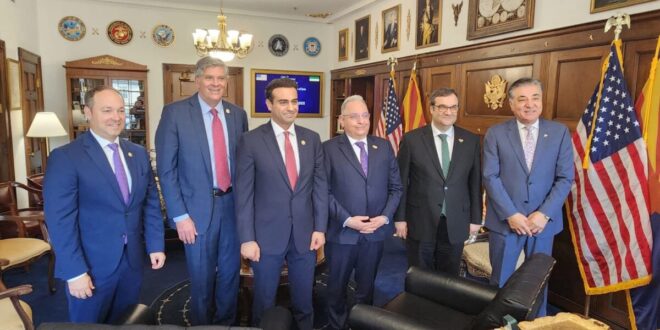

There is something telling about a smile in Washington. Not the ceremonial kind that accompanies routine diplomacy, but the carefully staged image of acceptance—the kind that signals a transaction already agreed upon behind closed doors. Reports of meetings between associates of Ahmed al-Sharaa and members of the United States Congress suggest more than a diplomatic thaw. They point to a deeper, more consequential bargain: the exchange of sovereignty for survival.
The transformation from “al-Jolani” to “al-Sharaa” was not merely cosmetic. It was a form of rehabilitation—a rebranding exercise designed to render a once-unacceptable figure palatable within Western policy circles. In international politics, legitimacy is rarely granted; it is negotiated, often at a price. In this case, the price appears to be Syria’s economic autonomy.
Signing away what one does not own
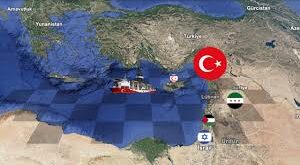
Emerging reports indicate that agreements have been signed granting the United States exclusive rights to explore and potentially exploit gas resources in Syrian territorial waters. Even if such arrangements are framed as economic cooperation, their implications are far more profound. They represent a transfer of intergenerational wealth under conditions of political dependency.
This is not foreign investment in the conventional sense. It is resource securitisation under asymmetrical power relations—a mechanism through which natural assets are leveraged to secure external backing. In effect, the state’s maritime wealth becomes collateral for regime durability.
The Iraqi precedent, revisited
More troubling still are indications of financial terms that echo one of the most controversial economic regimes of the modern Middle East: Iraq’s “oil-for-food” programme. Under such an arrangement, energy revenues are not channelled through the national central bank but are instead held externally, subject to foreign oversight and conditional disbursement.
The consequence is a form of monetary disenfranchisement. A state stripped of control over its own revenue streams cannot pursue independent fiscal policy, invest in reconstruction, or stimulate economic growth. It becomes, in effect, a rent-dependent administrative shell—capable of paying salaries, but incapable of development.
This is not economy management; it is economic containment.
Hunger as a governance strategy
While elite negotiations unfold abroad, the lived reality in Syria tells a different story. Economic deprivation is not merely a by-product of conflict; it risks becoming an instrument of governance. A population preoccupied with basic survival is less capable of political mobilisation. In this sense, scarcity functions as a tool of control.
The deliberate weakening of domestic economic capacity—what might be termed induced structural fragility—ensures that demands for accountability remain muted. Bread replaces ballots; subsistence replaces citizenship.
Such dynamics are not unprecedented. They align with a broader pattern in authoritarian political economy, where regimes prioritise political stability over economic vitality, even at the cost of long-term national decline.
The externalisation of legitimacy
At the heart of this evolving model lies a critical shift: legitimacy is no longer derived from the governed, but from external patrons. For Ahmed al-Sharaa, political survival appears increasingly tied to his ability to safeguard the interests of external stakeholders—whether Western, regional, or otherwise.
This reflects a classic case of clientelist sovereignty, in which domestic authority is sustained through external guranatees rather than internal consent. The ruler becomes less a representative of national interests and more a custodian of international arrangements.
A brutal equilibrium
The emerging equation is stark. National resources are monetised externally; domestic economy remains paralysed; and political authority is insulated from internal pressure through economic weakness. It is a system that trades long-term sovereignty for short-term stability—a bargain that history suggests is rarely sustainable.
For Syria, the implications extend beyond the present moment. The alienation of natural resources, the erosion of fiscal autonomy, and the institutionalisation of dependency risk entrenching a cycle of underdevelopment that will outlast any single political figure.
Conclusion: sovereignty as collateral
In the end, the question is not whether such arrangements can stabilise a fragile regime in the short term—they often can. The question is what remains of the state once sovereignty itself becomes a negotiable asset.
By positioning himself as a reliable guardian of external interests, Ahmed al-Sharaa may secure recognition and protection. But in doing so, he risks redefining governance as a transactional enterprise—one in which a nation’s wealth is exchanged for the continuum of a single ruler.
It is a grim calculus: impoverish the many, monetise the future, and preserve the present—at any cost.