Geostrategic Media Political Commentary, Analysis, Security, Defense

By Engineer Salem Al-Batayneh
Former Member of the Jordanian Parliament
There are events that make you lose your mind. A question leaves us stunned before the spirit of evil when it cloaks itself in human beings: How did this happen?
What occurred is unprecedented. Never in Jordan’s history have Jordanian Christians, performing their prayers in their church, ever been a target of terrorism.
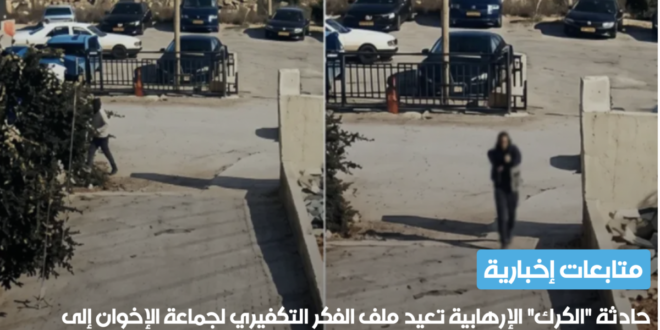
Criminals chose a moment of grief—without mercy or compassion—to multiply it. They stormed a house of worship and opened fire on worshippers who had come to bid farewell to a woman. They bid farewell to nine others with her.
This is a deviant ideology falsely attributed to Islam, and Islam is innocent of what they do. Religion is not victorious by shedding blood or violating places of worship. No religion incites killing and brutality against people.
The bullet that was fired in the church courtyard was not born in the safe town of Hamoud. It was born decades and years before that. Jordan has witnessed numerous waves of the danger of cells and terrorist operations. Between 1970 and 2020 alone, nearly 134 terrorist operations were recorded, in addition to other plots that security agencies foiled before they could be carried out.
The deadliest of these were the 2005 Amman bombings, which claimed the lives of more than sixty people and changed the strategy of Jordanian security in combating terrorism. Years later came the incidents of Baqaa, Salt, and Karak Castle.
Confronting extremism and terrorism cannot be achieved through security pursuit or monitoring alone. It requires drying up the intellectual sources and incubators, and formulating an integrated security and legal strategy focused on taking precautionary and preventive measures to stop crime before it occurs—moving from the level of monitoring to pursuit and legal accountability.
Jordan is a country where the question of the relationship between Muslims and Christians has never been raised. It is a homeland for Christians and a living witness to their authentic historical presence. Christians are not a community or an emergency minority; they are the builders of this land and partners in its history, present, and future. More importantly, they are part of our soul—a song of love chanted by every honest Jordanian.
We must realize that the blessing of security exists only with its foundations and endures only with its causes. Protecting the Jordanian national fabric does not mean hiding the difficult questions, but answering them with clear evidence. Protecting generations at all age stages from ideological recruitment begins with addressing unemployment, idleness, poverty, and social justice—protecting society from producing a generation that sees its own community as an enemy.
The church incident has confirmed that national cohesion is not tested only in times of calm, but when fear becomes capable of turning into anger.
Jordan will certainly overcome this ordeal. It is a country accustomed to carrying its wounds with patience and steadfastness. May God have mercy on Jordan’s martyrs in the Hamoud church, heal our wounded, and preserve Jordan and its leadership safe and stable—one homeland for all its children.