Geostrategic Media Political Commentary, Analysis, Security, Defense

After 40 days of sustained military confrontation that pushed the region to the brink of a broader Middle Eastern war—and threatened a global energy shock—the United States and Iran announced, on April 8, 2026, a ceasefire agreement mediated by Pakistan. The deal includes a two-week suspension of hostilities and the launch of negotiations in Islamabad beginning April 10, with the stated aim of reaching a permanent settlement to end the war.
The agreement came just two hours before an ultimatum issued by U.S. President Donald Trump expired, an ultimatum that threatened the opening of the Strait of Hormuz under military pressure, including strikes on Iranian energy facilities, bridges, and key infrastructure. Yet even as the guns fell silent, the details of the deal remain opaque, overshadowed by competing narratives from both sides—particularly regarding the status of the Strait of Hormuz and whether the ceasefire extends to the Lebanese front. Each party claims strategic victory, seeking to frame the truce not as compromise, but as confirmation of strength.
The Context of Ceasefire: A War That Outran Its Assumptions
Six weeks into a war launched by the United States and Israel with the declared objective of either forcing Iranian compliance or destabilizing its governing system, it became increasingly clear to President Trump that the underlying assumptions were collapsing.
The original premise—largely shaped by Israeli strategic expectations—was that a rapid decapitation of Iran’s political and military leadership would trigger internal unrest and potentially regime collapse. Instead, the opposite occurred: the Iranian state consolidated under a more hardline leadership structure.
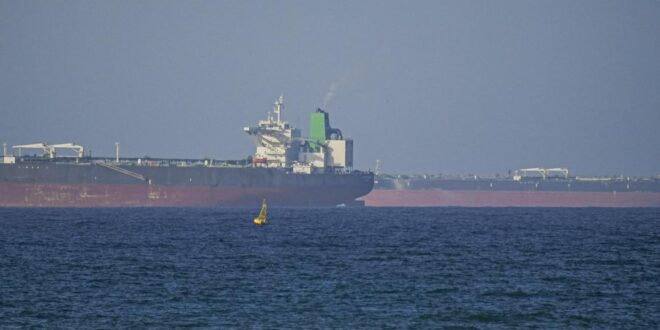
What was designed as a short, decisive campaign evolved into a prolonged confrontation with escalating political and economic costs. Chief among them was Iran’s closure of the Strait of Hormuz, which triggered a sharp rise in global energy prices and added domestic political pressure in the United States ahead of critical midterm elections.
Faced with this trajectory, Trump escalated pressure dramatically. On March 21, 2026, he issued an ultimatum: if Iran did not reopen the Strait within 48 hours, the United States would begin striking Iran’s energy infrastructure, starting with its largest facilities.
But the deadline was repeatedly extended under regional and diplomatic pressure. First, a five-day delay was announced following what Trump described as “productive and constructive talks” with Tehran, including claims—denied by Iran—of a 15-point provisional understanding. Further extensions followed, pushing the ultimatum to April 6, then finally to 8 April at 8 p.m. Washington time.
During this period, U.S. rhetoric intensified sharply, including threats to “destroy Iranian civilization” and warnings of a return “to the Stone Age.” Simultaneously, Washington escalated military preparations and reportedly considered limited ground operations targeting Kharg Island, Iran’s main oil export hub.
Efforts were also made at the United Nations Security Council, where Bahrain submitted a draft resolution calling for “freedom of navigation in the Strait of Hormuz.” The resolution was ultimately vetoed by China and Russia, who argued it failed to address responsibility for the outbreak of hostilities and risked legitimizing broader military escalation.
Strategic Exhaustion: Why the Ceasefire Became Necessary
For Washington, the growing fear was not only strategic failure, but political overreach. A prolonged war with Iran risked draining economic resources, destabilizing energy markets, and undermining electoral prospects. More critically, it raised the prospect of a costly ground escalation—an outcome increasingly seen as politically unsustainable.
For Tehran, the calculus was equally pragmatic. Despite sustaining significant damage, Iran faced the need for a controlled exit from a costly confrontation while preserving regime stability and strategic deterrence. Trump’s increasingly erratic and maximalist rhetoric also signaled a narrowing window for negotiation.
Under this pressure, and reportedly following diplomatic intervention from China, Iran agreed to a Pakistani proposal announced by Prime Minister Shehbaz Sharif. The framework included:
- Immediate ceasefire between Iran, the United States, and their respective allies across all theaters, including Lebanon and beyond.
- Immediate implementation of the ceasefire.
- Commencement of negotiations in Islamabad on April 10 to pursue a comprehensive settlement covering all outstanding disputes.
The agreement also provided for a temporary reopening of the Strait of Hormuz for two weeks, subject to extension during negotiations. However, even this element remains contested. Iranian Foreign Minister Abbas Araghchi described it as “controlled passage under coordination with Iranian armed forces,” while Trump presented it as a logistical arrangement to ease maritime congestion caused by the crisis.
Negotiation Prospects: A Familiar Deadlock Returns
Since Trump’s return to the White House in January 2025, Washington and Tehran have already undergone multiple negotiation cycles. The first began in April 2025 but collapsed following Israel’s war on Iran in June. A second round of talks in early 2026—held between Muscat, Rome, and Geneva—also failed, culminating in a renewed escalation that lasted 40 days.
At the core of the current impasse is a fundamental mismatch in expectations. The United States seeks a comprehensive restructuring of Iran’s strategic posture, while Iran insists on limiting talks strictly to the nuclear file.
During the latest escalation, Washington presented Iran—via Pakistan—with a 15-point proposal demanding dismantlement of nuclear infrastructure, suspension of uranium enrichment, destruction of key facilities in Natanz, Isfahan, and Fordow, and restrictions on missile capabilities and regional alliances. Iran responded with a counterproposal of its own, insisting on compensation for war damages, formal recognition of aggression, full sanctions relief, and guarantees against future attacks.
The gap between the two positions remains vast. Even the ceasefire itself appears less a negotiated settlement than a forced pause imposed by the operational consequences of the war—most notably the closure of Hormuz.
The Israeli Dimension: A Parallel War Within the War
Although Israel was not formally part of the ceasefire framework, it has declared its adherence to the truce with Iran—while explicitly excluding Lebanon from its scope.
Israeli Prime Minister Benjamin Netanyahu reportedly informed President Trump that while Israel would respect the ceasefire with Iran, it would continue military operations in Lebanon. The White House confirmed that Lebanon was not included in the agreement.
Israel played a central role in advocating for the war against Iran and was instrumental in shaping the strategic logic that led Washington into the conflict. However, as domestic and international criticism grows over the economic and political costs of the war, Israeli officials have increasingly sought to distance themselves from direct responsibility.
At the same time, Israel has actively worked to disrupt diplomatic channels between Washington and Tehran. Reports indicate that it conducted strikes during the final days of the ultimatum period, including an attack on a major petrochemical facility in Assaluyeh producing nearly half of Iran’s petrochemical output—widely interpreted as a signal of escalation intended to derail negotiations.
Israel’s strategic objectives remain largely unmet, particularly regime change in Iran and the expansion of the conflict to include Gulf states. However, its insistence on separating the Lebanese and Iranian fronts continues to complicate any unified regional settlement.
A War That Continued During the Ceasefire
Even as the ceasefire was announced, Israel launched approximately 100 airstrikes on Beirut and its suburbs within minutes, causing mass casualties and destruction. The timing—coinciding with global attention on the ceasefire—suggested a deliberate effort to maximize operational impact during a transitional moment.
Conclusion: A Ceasefire Without Resolution
As Gulf states prepared for the possibility of a large-scale U.S. military campaign, the Pakistani-led mediation effort succeeded—just hours before the deadline—in securing a ceasefire agreement between Washington and Tehran. Negotiations are now set to resume in Islamabad under highly uncertain conditions.
Yet the fundamental contradictions remain unresolved.
The United States demands deep structural constraints on Iran’s nuclear and missile programs. Iran insists on sovereignty, compensation, and guarantees against future aggression. Israel continues to push for maximalist outcomes while pursuing parallel military campaigns in Lebanon.
In this environment, the ceasefire is not a resolution but a suspension—a temporary containment of a conflict whose underlying drivers remain fully intact.
Whether diplomacy can succeed where military escalation has failed remains uncertain. But what is clear is that the war has not ended—it has merely entered a new phase, conducted under the fragile illusion of pause.