Geostrategic Media Political Commentary, Analysis, Security, Defense

Lama Al-Rakad
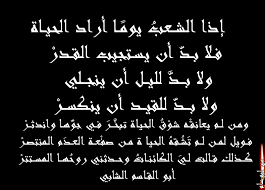
History is not a passive record of events; it is a testing ground for human will under pressure. Across centuries and continents, one principle has endured: injustice, no matter how technologically advanced or internationally shielded, carries within it the seeds of its own collapse. The line often attributed to the Tunisian poet Abu al-Qasim al-Shabi—“If the people one day will to live, fate must respond”—is not just poetry. It is a social law, validated from Vietnam to Algeria, and echoed in countless struggles where ordinary people refused to accept permanent subjugation.
Today, that law is being tested again in a world where power increasingly operates through what might be called the engineering of dependency. Major powers rarely rule directly; instead, they cultivate leadership structures aligned with their interests—figures whose authority rests less on popular legitimacy than on external backing. This is not new, but its contemporary expression is sharper, more systematized, and more global.
In places like Ukraine, Syria, and Lebanon, different political trajectories are often interpreted through a similar lens: that of leadership entangled with external agendas, navigating conflicts shaped as much by international rivalry as by domestic realities. The outcomes are painfully familiar—prolonged wars, fractured institutions, and societies bearing the cost of geopolitical contests. Whether one agrees with this framing or challenges it, the underlying concern resonates: when decision-making is perceived as externally influenced, public trust erodes, and the social contract weakens.
This is the deeper anxiety behind what critics describe as the “commodification of nations.” It is the sense that territories, resources, and even human lives are treated as variables in a broader strategic equation—traded, leveraged, or sacrificed in pursuit of advantage. In such an environment, sovereignty risks becoming transactional, and politics risks becoming managerial rather than representative.
Yet against this, there persists another force: resistance—not merely as armed struggle, but as an idea. Historically, figures like Che Guevara symbolized a belief that solidarity with the oppressed transcends borders. But resistance need not be romanticized or reduced to violence; at its core, it is the insistence that dignity is non-negotiable. It appears in protests, in civil movements, in cultural expression, and in the quiet refusal to normalize injustice.
Few examples illustrate the cost—and the endurance—of this principle more starkly than Algeria. The war of independence stands as one of the 20th century’s most brutal anti-colonial struggles, a reminder that freedom is rarely granted without sacrifice. The price was immense, but the lesson endures: the longer domination persists, the more it generates the conditions for its own undoing.
Occupation, in its many forms, is not only about land. It is about psychology. It erodes institutions, fragments identity, and seeks to normalize inequality. When homes are destroyed, the damage extends beyond physical structures—it strikes at memory, belonging, and hope. The result is not just material loss, but a deeper human rupture.
And yet, history suggests that such conditions are inherently unstable. Systems built on coercion, dependency, or external imposition may endure for a time, but they struggle to achieve lasting legitimacy. Sooner or later, they confront the same force that has reshaped societies for generations: the collective demand for dignity, agency, and self-determination.
This is why the notion of permanence in occupation or proxy governance is ultimately illusory. Political arrangements that disregard the will of the people tend to unravel—sometimes gradually, sometimes suddenly. The timing is unpredictable, but the trajectory is familiar.
The lesson is neither simplistic nor absolute. Not every conflict fits the same pattern, and not every leadership structure can be reduced to a single narrative. But the broader principle remains: societies are not inert assets. They are living entities shaped by memory, identity, and aspiration. Attempts to reduce them to instruments of strategy may succeed temporarily, but they rarely succeed indefinitely.
In the end, the arc of history does not bend automatically toward justice—but it does respond to pressure. And when that pressure comes from a sustained, collective insistence on dignity, it becomes difficult to ignore.
The night may be long. But it has never been permanent.
About the Author:
Lama Al-Rakad is a Syrian journalist and media expert.