Geostrategic Media Political Commentary, Analysis, Security, Defense

Donald Trump’s war on Iran has done what imperial wars often do. It has stripped the familiar vocabulary to the bone. The old words are still there, of course. Security. Stability. Deterrence. Order. But they no longer conceal very much. When a president threatens to wreck power plants, bridges, and the wider conditions of civilian life, the script starts to collapse. The moral varnish peels. What remains is something older and harder. A great power claiming for itself the right to act outside the law while still demanding that everyone else treat the law as intact.
This is not simply a matter of temperament. It is not just Trump being Trump, vulgar where others were polished, blunt where others were careful. That is too easy. Trump’s Iran war matters because it reveals a deeper truth about American power. The United States has long wanted two things at once. It wants the prestige of legality and the freedom of exemption. It wants to write the rules, speak in their name, and step around them when they begin to restrain American power. That habit is not new. One can trace it from the 1986 ICJ Nicaragua Judgment, which Washington rejected, to the 2003 invasion of Iraq, launched without a fresh UN Security Council resolutionexplicitly authorising force. In Iran, that contradiction is not sitting in the background. It is the whole story.
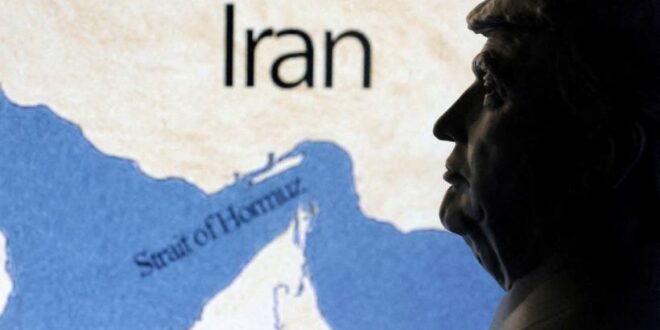
Trump warned that the United States would “obliterate” Iran’s energy plants and oil fields if Tehran did not reopen the Strait of Hormuz. Days later, he threatened to hit Iran “extremely hard” and send it “back to the Stone Ages”. That phrase should not pass as just another outburst in the daily flood of outrage. It tells us how civilian life enters the imagination of imperial punishment. Not as life, not as society, not as ordinary human dependence on water, electricity, roads, schools, hospitals, but as leverage. As something to be darkened, broken, or withheld until obedience returns.
This is precisely why international law exists. Not to flatter the weak. The weak rarely possess the means to present devastation as doctrine. International law exists to place limits on the strong, to say that power alone does not convert coercion into justice. The prohibition on the use of force in the UN Charter was built from the memory of catastrophe. It was meant to foreclose the ancient right of might. Yet more than 100 legal experts have argued that the American and Israeli attacks launched on 28 February violate that basic framework because they do not satisfy the recognised legal thresholds of self-defence or Security Council authorisation. The same experts warned that official threats against civilian infrastructure suggest profound disregard not only for the Charter but for international humanitarian law itself. It is one thing to know, in the abstract, that powerful states often push at legal limits. It is another to watch them threaten the foundations of collective life and still speak as though they are the custodians of civilisation.
This is where two prominent scholars, Kimberlé Crenshaw and Timothy Snyder, become useful, not as ornamental references but as interpreters of the political logic at work. Power does not merely dominate. It teaches. It tells people what to celebrate and what to suppress, and more worryingly, what forms of violence are to be accepted as normal. Once political cultures slip from interpretation into idolisation, whether idolisation of founding myths, great men, constitutional relics, or national innocence, democratic life starts to hollow out. Law is still visible, but more as theatre than restraint. Meaning slides from text to force, from principle to leader, from argument to command.
That is exactly the atmosphere in which this war unfolds. American violence is still narrated as categorically distinct from the violence of others. When Washington bombs, threatens, and escalates, the action is wrapped in strategic language. When others resist, retaliate, or refuse, their conduct is cast as irrationality, fanaticism, or regional pathology. The asymmetry is not accidental. It is one of empire’s oldest habits. It turns its own force into management and the force of others into menace.
Iran’s rulers are authoritarian, violent, and deeply repressive. That is true. But it changes nothing essential about the legal and moral question. International law is not tested when it is applied to the innocent. It is tested when it is applied to enemies. If legality vanishes the moment the target is a hostile state, then what is left is not law, but power draped in universal claims. That, in truth, is what the current moment is exposing. America is not merely bending the rules. It is reminding the world that, for the powerful, rules are often treated as options.
Then comes the question of civilian infrastructure, that bloodless phrase which allows modern violence to sound almost technical. A bridge becomes a target set. A power station becomes a node. A desalination facility becomes dual-use. What disappears in that jargon is the simple fact that these are the conditions of life. To threaten them is not simply to strike at a regime. It is to press on the daily existence of millions. Legal concern has grown that such actions may amount to war crimes, especially where infrastructure indispensable to civilian survival is concerned.
One incident in particular should weigh on the conscience of anyone still tempted by official euphemism. The strike on the Shajareh Tayyebeh girls’ school in Minab, which Iranian officials said killed at least 168 people, many of them children, is now central to wider legal scrutiny. Preliminary U.S. investigative findings reportedly indicated that American forces likely carried out the strike and that outdated intelligence may have shaped the targeting decision. This is how power cleans its hands in public. Outdated intelligence. Likely responsibility. Review pending. The children, meanwhile, are still dead.
And here the question of selective empathy cuts sharply into the scene. Some lives arrive before Western audiences as fully human. They are named, narrated, mourned. Others arrive flattened into arithmetic. They are regrettable, then digestible. This is not merely media bias, though it includes that. It is part of a larger hierarchy of recognition. Some children are allowed innocence. Others are crumpled into the background conditions of war. This, too, is how imperial innocence is maintained. Not only by denying violence, but by distributing grief unevenly.
Once a society trains itself to worship its own virtue before examining its conduct, facts begin to lose force. Evidence no longer interrupts the story. It either absorbs this new truth, rationalises it away, or displaces it with a greater moral narrative in which the nation remains fundamentally innocent. This is why even shocking acts cannot pierce through this social consensus. The school strike, the destroyed infrastructure, the civilian dead, all can be folded back into the same familiar phrase: tragic necessity. It asks not to be tested but repeated.
There is also a domestic lesson buried here, and it is not a minor one. States do not treat international law as disposable abroad and then become scrupulous constitutionalists at home. The habits travel. When a government develops an attitude of disdain for treaties, humanitarian restraints and protection of civilians – it will eventually develop an equally dismissive attitude toward domestic checks on power. Courts become obstacles. Oversight becomes sabotage. Legislatures become stage furniture. Then what we have is constitutional nihilism. The text is still there. The ceremonies are still there. The flags are still there. But power has already shifted elsewhere, into personality, emergency, exemption, force.
This is why Trump should not be misunderstood as a clean break. He is a revelation. He says more plainly what the imperial centre has often implied. That order is what American power declares it to be. That legality is meaningful when disciplining others and negotiable when constraining Washington.
The rhetoric of the rules-based order survives, but in damaged shape. One hears it now almost as an echo rather than a conviction. The war in Iran has made that hollowness difficult to hide. The closure of the Strait of Hormuz, the widening energy shock, the deepening civilian toll, none of this has produced humility. It has produced more threats, more certainty, more imperial impatience. The United States does not sound like a state sobered by the weight of law. It sounds like a state irritated that law still needs to be mentioned at all.
So the question is no longer whether Iran’s rulers deserve criticism. They do. The issue here is if international law has any value when the most powerful country in the world determines it is inconvenient. If the response is no, then it would be better to simply admit this and end using euphemistic language.
Trump’s war on Iran is not only an assault on a state. It is an assault on the idea that power can be restrained by principle. And once that idea weakens further, the damage will not remain in Tehran, Minab, or the Strait of Hormuz. It will travel. It always does.