Geostrategic Media Political Commentary, Analysis, Security, Defense

Dr. Naveen Dubey
After Operation ‘Midnight Hammer,’ which claimed to have destroyed the Fordow nuclear facility in Iran, the US president, Donald Trump, pointing at a replica of a B2 stealth bomber in his Oval Office in the White House, praised the great achievement of the US Air Force involved in that operation. It was the act of stopping the rogue regime from having nuclear arsenals, according to him. Soon after this incident, the US Delta Force captured the Venezuelan president Nicolas Maduro and his wife and brought them to America for legal trial. This was the end of the authoritarian regime, as he declared Delcy Rodriguez the next president of Venezuela and ordered the American oil companies to invest and reshape the oil infrastructure so that large production of crude oil from there could be sold in the international market to make money for the US state treasury. These were overnight operations that yielded unexpected results for the president and boosted his morale even to occupy Greenland, part of Denmark, either militarily or by paying the price for the land—rich in oil reserves and rare earth elements—despite the domestic and international criticisms. This project has not moved ahead for whatsoever reason.
An all-out war in the Middle East was looming without the world noticing that even those states that will not take part in it will be impacted economically. And finally this became true when the Iranian security apparatus started its brutal suppression and massacre of protestors on the streets who demanded freedom from theocratic authoritarianism. The US president, Trump, promised the protestors to send his help that could topple the Iranian regime. On February 28, 2026, the world was taken by surprise with the news floating in the international media outlets that the Iranian supreme leader Ayatollah Ali Khamenei was killed in his office in the Israel and US joint airstrike in Tehran, in the operation named ‘Epic Fury.’ This happened when the meeting between the US and Iranian interlocutors failed to yield any meaningful result in Geneva. Ever since then, the Middle East has been engulfed in the regional war.
“Operation Epic Fury” and Global Economic Impact
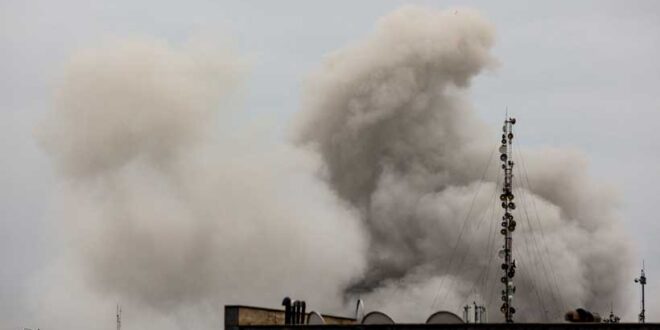
The objective and scope of Operation Epic Fury seemed to be to decapitate the Khamenei regime so that it would capitulate, and dissidents could take over. However, even after the assassination of Khamenei and his forty top commanders—and this list increased every single day—the objective does not seem to be fulfilled in the near future. So far, the Israeli and US air forces have claimed that they destroyed the Iranian navy and air force, nuclear installations, missile silos and launchers, radars and air defense systems, drone factories, oil fields, oil storage facilities and pipelines, and the Iranian Revolutionary Guard Corps (IRGC), intelligence, and police headquarters. They claim to have pulverized Iran so much so that its capacity to retaliate with its long-range ballistic missiles and hit Israel, American naval bases, embassies and consulates in the Middle East, as well as the public and oil infrastructure in the UAE and Saudi Arabia, has decreased significantly. However, the international media outlets’ optics tell different stories, i.e., the frequency of retaliatory attacks might have decreased, but they are still persistent. Iran knows it cannot match the firepower of the US. So, it has shifted its military battle to an economic war domain by targeting and destroying the oil infrastructure of the Gulf countries and choking the maritime route, the Strait of Hormuz.
The fallout of this war has impacted the global economy with the increase in the oil and gas price and decrease in the stock market. The international oil price has gone through the roof from sixty-five dollars to one hundred ten dollars per barrel, and it is likely to increase further if the war continues. Similarly, the scarcity of cooking gas and people queuing in line with their cylinders at the gas dealers and depots have become a new normal in the Indian subcontinent. The hike in the fuel price has increased inflation as the food and commodities are gradually becoming unaffordable for laymen. The inflation has also hit the US and EU, and there is scarcity of food and commodities in the Gulf countries due to disruption in the global supply chain.
Shifting geopolitics and rebalancing of power
From the outset, the joint aerial campaign of the US Air Force and Israel Defense Forces (IDF) appeared to dispose of the Khamenei regime and decimate the uranium enrichment facilities and ballistic missile program so that the anti-Khamenei liberal Iranian people, who are proud of their Persian heritage and who want peace and prosperity as during the Shah regime, could take control of their nation. This is the rationale behind the invasion of Iran being floated to the world. But, in reality, the objective of the aerial campaign seems to be the total destruction of Iran. According to the IDF source, they have twenty thousand targets to eliminate, and a thousand targets are being destroyed with waves of airstrikes per day. A geopolitical game is being played here in the Middle East to tilt the balance of power to the US and Israel and to counter the dominance of the alliance of China, Russia, and Iran in this region. Iran has already signed a “comprehensive strategic partnership” with China to expand its bilateral ties and trade to US $600 billion over a ten-year period and recognized the Belt and Road Initiative (BRI) for connecting China to the EU via. Middle East, which is now jeopardized. In Trump and Netanyahu’s playbook, the Iranian nation with nuclear deterrence is a perpetual threat to the existence of Israel; therefore, pulverizing Iran serves the purpose of both countering China and Russia’s geopolitical dominance and elevating Israel to the status of a regional power in the Middle East. In addition, the US intends to capture the oil assets, dominate the global supply chain of oil, and control the strategic location of the maritime route, the Strait of Hormuz. This was obvious from the US requesting the Israelis not to bomb Kharg Island of Iran, which is rich in oil reserves. And Republican Senator Lindsey Graham openly admitted that the US can sell the thirty-one percent of world oil extracted from Venezuela and Iran in the international market and earn tons of money.
Conclusion
A layman with some knowledge of military strategy calculus can understand that no war can be won without the “boots on the ground.” The navy and air force can eliminate the strategic targets of the enemy, but the final victory comes from the battle on the ground. Deployment of the army for combat means more human deaths and casualties, which the US president won’t opt for, because more body bags going back to the US will decrease his popularity in the upcoming midterm election. As an alternative to this, the US is arming and backing up the Kurd militias and other sectarian factions within Iran, which are anti-Khamenei regime, to decapitate the current dispensation, according to the international media outlets. It is speculated that the defectors from the IRGC, army, and police will also join the militias.
The ongoing war has already stoked the fire of Shia and Sunni enmity, as Iran is pounding the oil and public infrastructures in the UAE and Saudi Arabia, causing a global energy crisis. If the US goes for the alternative option, the Middle East region will be pushed to a protracted sectarian war. And a long-time armed conflict between the Shia and Sunni nations in this region will further exacerbate the energy crisis, disrupt the global supply chain, and impact the global economy. So far, Operation Epic Fury has not only crippled Iran militarily but also economically. The desalination plant, power plant, and oil storage facilities have all been decimated. Hypothetically, even if Iran is liberated from the authoritarian regime by whatever means, in the short or long term, the loser will still be the Iranian people because the magnitude of destruction in this war is so much that it will take decades to rebuild Iran. War-torn Syria and Iraq have not been able to reconstruct themselves as what they used to be in their glorious past.
About the Author:
Dr. Naveen is a Kathmandu-based freelance researcher.