Geostrategic Media Political Commentary, Analysis, Security, Defense

Hadi Elis
For over a century, the Kurdish people have endured a systematic campaign of oppression thatseeks to erase their identity, their language, and their very existence. At the heart of this struggle stands a figure too often overlooked in international discourse: the Kurdish woman, who bears the weight of dual oppression—both as a Kurd and as a woman—yet remains at the forefront of the fight for peace, justice, and dignity.
The story of Turkish-Kurdish conflict is well-documented, but the gendered dimension of this violence demands our urgent attention. Since the founding of the Turkish Republic in 1923, Kurdish women have faced not only the militarized assimilation policies that target all Kurds but also the specific brutality reserved for women in conflict zones: rape, sexual abuse, and targeted violence designed to break communities and silence resistance.
The Vartinis massacre of October 3, 1993, exemplifies this cruelty. In the village of Vartinis, Turkish military personnel burned alive Esref Ogut, a mother of seven, along with her husband and six of their children. When this mother, in a final act of desperate love, threw her two youngest sons—aged three and five—from the burning house, soldiers ordered them thrown back into the flames. Only one child survived: Aysel Ogut, who was not home that night. Her decades-long quest for justice has been repeatedly denied by Turkish courts, culminating in a February 2024 decision that the burning alive of nine people “didn’t constitute a crime against humanity.”
This is not an isolated incident. It is the logical endpoint of a system that has enabled impunity for crimes against Kurds, and particularly against Kurdish women, for generations.
Yet from this darkness, Kurdish women have forged extraordinary resistance.
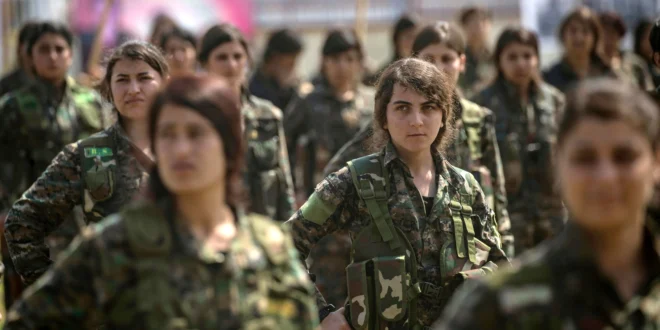
In 1995, Kurdish women established the YJA (Free Women Units), women-only military units that grew to comprise one-third of PKK forces. In Syria, the YPJ (Women Protection Units) played a decisive role in defeating ISIS—a victory that should be celebrated globally but is too often ignored because it complicates the narrative that Kurdish fighters are “terrorists.”
The “Jin, Jiyan, Azadi” (Women, Life, Freedom) movement that erupted after the murder of Jina Amini by Iranian morality police demonstrated once again the power of women-led resistance. Kurdish women have proven, time and again, that they are not merely victims of conflict but architects of peace.
During the 2008-2013 resolution process between Turkey and the PKK, Kurdish women activists made their demands clear. The Women for Peace Initiative (BIKG), institutionalized in 2009, called for constitutional guarantees of gender equality, exposure of crimes committed against Kurds, punishment of perpetrators of rape and sexual harassment, identification of mass graves, and equal representation of women in all peace process committees. They grounded their demands in UN Security Council Resolution 1325, which recognizes women’s essential role in conflict prevention and peacebuilding.
The AKP government ignored them. In 2015, Turkey refused to sign a peace agreement, and war resumed. It continued until October 2025, when a second peace process began—one that remains fragile and uncertain.
Today, as we witness renewed diplomatic efforts and high-level meetings at the United Nations, we must ask: whose voices are at the table? President Trump’s meetings with Gulf leaders and regional powers may address geopolitics, but they will not achieve sustainable peace if they continue to exclude the very people who have suffered most and contributed most to resistance and reconciliation.
Kurdish women like Leyla Zana, the imprisoned Sakharov Prize laureate; Sakine Cansiz, assassinated in Paris in 2013; Turkiye Bozkurt of the Peace Mothers movement; Gulten Kisanak, former co-Mayor of Diyarbakir; and Ayla Akat Ata, who participated in peace negotiations—these women represent a legacy of courage that should inform any serious peace process.
The international community, including the United Nations and its Secretary-General, must do more than offer generic calls for dialogue. They must demand accountability for crimes against humanity, ensure that women are equal participants in all peace negotiations, and recognize that the Kurdish women’s movement represents one of the most potent ideological challenges to authoritarianism and extremism in the region.
Organized women’s movements threaten Turkish nationalists and religious fundamentalists precisely because they offer an alternative vision—one based on equality, justice, and genuine democracy. The defeat of ISIS and the women-led uprising in Iran demonstrate what is possible when women lead.
A century of oppression has not broken Kurdish women. Instead, it has forged a movement that understands, perhaps better than any other, that there can be no peace without justice and no justice without the full participation of women.
As peace talks continue and the world watches, we must ensure that the women who have carried the heaviest burdens are finally given their rightful place at the center of building a better future. Anything less is not peace—it is merely a pause in the violence.
Author’s Bio:
Hadi Elis is a writer and advocate for Kurdish rights and women’s participation in peacebuilding. This op-ed is based on a speech prepared for IAMPE (September 19-20, 2026, Cyprus).