Geostrategic Media Political Commentary, Analysis, Security, Defense

Dr. Shehab Al-Makahleh
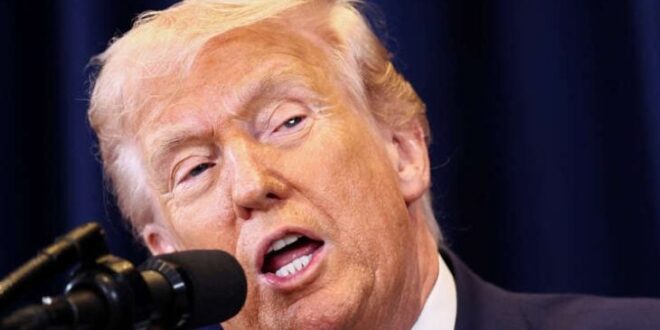
President Trump is scheduled to deliver a prime‑time address from the White House on Wednesday at 9:00 p.m. Eastern. The stated purpose is “an important update on Iran,” but the broader context suggests a high‑stakes effort to manage domestic and international expectations amid an ongoing war that has now entered its second month. With conflicting signals from the administration about the conflict’s duration, rising gas prices, and mixed military messaging, the speech is likely to serve three overlapping goals: declare progress, frame the endgame, and project resolve while managing political risk.
Key Drivers Shaping the Address
-
Conflicting Timelines – In the past 48 hours, President Trump has given contradictory estimates: first saying the war would last “two or three more weeks,” then stating the U.S. assault could continue “a couple days longer” to “knock out every single thing they have.” This inconsistency signals internal debate and a need to reset narrative control.
-
Domestic Political Pressure – Gasoline prices have crossed $4 per gallon nationally, a 35% increase since the war began. While the stock market rallied on hopes of an end to hostilities, rising fuel costs are a political liability. Trump must reassure Americans that an end is in sight without appearing to concede military objectives.
-
Military Posture – The Pentagon has begun flying B‑52 bombers over Iranian territory—a significant escalation designed to demonstrate degraded Iranian air defenses. Yet Defense Secretary Hegseth conceded that Iran retains some retaliatory capability. The speech will need to balance toughness with realistic expectations.
-
Diplomatic Vacuum – Iran’s foreign minister has denied any substantive negotiations, contradicting Trump’s claim that talks are going well. The president may feel compelled to unveil a diplomatic breakthrough or a concrete ultimatum to fill that void.
-
Alliance Strains – Trump’s public criticism of Britain and other allies for not doing enough to secure the Strait of Hormuz, including his remark “Go get your own oil,” signals a go‑it‑alone posture. The address could double down on that theme or attempt to paper over divisions.
What Trump Will Likely Say
1. A Declarative Opening: “Mission Success”
Trump will frame the war as already largely accomplished. Expect him to:
-
Announce that Iran’s military infrastructure has been “crippled,” its air defenses “destroyed,” and its ability to produce or deliver nuclear weapons “set back years.”
-
Cite specific operational achievements: the B‑52 overflights as proof of air dominance, strikes on key facilities (possibly including the Isfahan explosion), and the disabling of Iranian missile launchers.
-
Use superlatives: “No country has ever suffered such a swift and decisive defeat.”
2. A New Phase: From Major Combat to “Stabilization”
To resolve the contradictory timeline, Trump will likely declare that the “major combat phase” is over or nearing completion, and that the U.S. is transitioning to a new phase focused on:
-
Ensuring Iran cannot reconstitute its nuclear or missile programs.
-
Maintaining a “permanent” or “long‑term” presence in the region to enforce the outcome.
-
Possibly announcing a drawdown of some forces while keeping B‑52s and naval assets on station.
He might say: “The heavy bombing is behind us. Now we will stay as long as necessary to make sure Iran never again threatens the world.”
3. A Claim of Diplomatic Progress
Despite Iran’s denials, Trump is likely to announce a diplomatic breakthrough:
-
He may state that Iran has “accepted our terms” for a cease‑fire or that a deal is “hours away.”
-
He could present a 15‑point framework—perhaps the same one Iran’s foreign minister said they had not responded to—as if it has been agreed in principle.
-
To lend credibility, he might mention that “senior Iranian officials are communicating through back channels,” leaving the impression of progress without producing a signed document.
4. An Ultimatum or a “Final Warning”
If no deal is announced, Trump will likely deliver a stark ultimatum: “Iran has one last chance to accept peace. If they refuse, we will use overwhelming force to finish the job.” This serves to pressure Tehran while giving the president an off‑ramp to claim he offered a way out.
5. Domestic Messaging: Gas Prices and the Economy
Acknowledging rising gas prices is politically unavoidable. Trump will:
-
Blame the spike on “Iran’s aggression” and the blockade of the Strait of Hormuz.
-
Argue that the war, though painful, was necessary to prevent a nuclear‑armed Iran that would have caused far greater economic disruption.
-
Promise that with the conflict winding down, gas prices will “start coming down very soon.”
-
Possibly announce an executive action to increase domestic energy production or release more from the Strategic Petroleum Reserve.
6. A Shot at Allies
Given his recent social media posts, Trump may reiterate criticism of allies—especially Britain—for not contributing more to maritime security. However, to avoid undermining coalition morale, he might soften the tone by thanking “those who have stood with us” and only implicitly chide others.
7. A Personal Note: “We Have Saved Countless Lives”
Expect a closing that mixes self‑congratulation with a forward‑looking promise: “Because of what we did, World War III has been avoided. Our children will grow up in a safer world.” He will likely invoke the fallen American service members (13 confirmed deaths) as heroes and reiterate that their sacrifice was not in vain.
Wildcards: What He Could Say
-
Declaring Victory and Immediate Cease‑fire – If a backchannel deal actually exists, Trump might announce a formal cessation of hostilities effective immediately. This would be the most dramatic and market‑friendly outcome, but it would require a level of Iranian cooperation that currently seems absent.
-
Announcing a Strike on Nuclear Sites – If the administration decided to use the speech to pre‑announce a major operation (e.g., against Natanz or Fordow), it would break with the pattern of ambiguous signaling. Given the B‑52 overflights are already happening, a surprise “we are about to deliver the final blow” is possible but would risk escalating just as he tries to claim victory.
-
Calling for Congressional Authorization – Unlikely. Trump has operated under existing AUMFs and the president’s war powers; he is not likely to invite legislative constraints now.
Risks and Post‑Speech Reactions
-
If Trump claims a deal that Iran denies – The credibility gap will widen. Tehran will likely respond quickly, and allies may privately express frustration.
-
If he offers only threats with no endgame – Markets could react negatively; gas prices might rise further. Political opponents will accuse him of dragging out a war without a clear exit.
-
If he announces a drawdown too soon – Military commanders may worry about leaving a vacuum that Iran could exploit. The Pentagon’s public posture will be watched for signs of disagreement.
Bottom Line
President Trump will use the address to declare the worst of the war over, assert strategic victory, and present himself as the decisive leader who both struck hard and is now bringing the troops home. He will blend military bravado with a promise of economic relief, and likely float a diplomatic breakthrough—real or implied—to create the impression that an end is imminent. The exact timing of “victory” will remain deliberately vague, allowing him to later adjust the narrative based on events.
High on themes and tone; medium on whether a concrete deal is announced. The safest bet: a speech designed to claim the mantle of peace through strength while managing domestic anxiety over rising prices and an uncertain end date.