Geostrategic Media Political Commentary, Analysis, Security, Defense
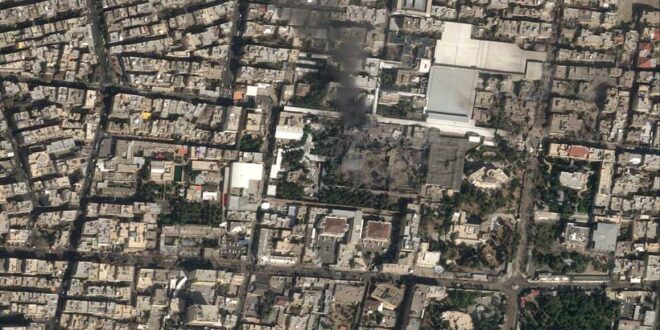

The US and Israel have continued their offensive in Iran, over three weeks since launching their initial airstrikes. The United States has stated that the strikes were necessary to ensure Iran never possesses nuclear weapons and that its terrorist proxies are not allowed to destabilise the region. The current regime in Iran has posed a threat to US interests by threatening to acquire nuclear capabilities and becoming one of the largest sponsors of terrorism. US President Donald Trump has urged Iran’s population to overthrow the current regime, which has seen many of its key leadership figures killed by US airstrikes. The US plans to topple Iran’s current regime through these actions, to ensure stability in the region and safeguard its own interests. However, Iran’s regime is unlikely to be removed by airstrikes, while its own retaliatory attacks have further caused instability in the region.
Why Airstrikes Will Not Be Enough to Topple Iran’s Regime
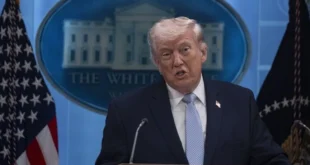
Announcing the launch of ‘Operation Epic Fury’ on Iran through a video statement, President Trump directly addressed Iran’s populace. He urged them to use the airstrikes as an opportunity to take control of their government. The same day, he confirmed that Iran’s Supreme Leader, Ayatollah Ali Khamenei, had been killed by a joint US-Israeli airstrike. The United States believes that eliminating key leadership figures and debilitating its military capabilities will allow Iran’s populace to overthrow the current regime. However, Ray Takeyh argues in Gauging the Impact of Massive US-Israeli Strikes on Iran that the Islamic Republic’s multi-layered elite and base of support allows its current regime to remain in power despite the death of its Supreme Leader and various other senior officials. Iran has also continued military and drone strikes across the Gulf three weeks into the conflict, suggesting that it continues to maintain its military capability. Therefore, if the United States continues its current course of action, pinning its hopes of a regime change on airstrikes and public pressure, it is unlikely to achieve its objective.
Considering Future Implications
In order to ensure the success of Operation Epic Fury, President Trump has previously suggested that the United States is willing to explore deploying troops to Iran. However, military analyst Colonel Nidal Abu Zeid pointed out to Al Jazeera that a traditional invasion would allow for a significant defensive advantage to Iran, due to factors involving its rugged terrain and demographic density. The deployment of troops is also likely to be an unpopular decision with the US public, only 27% of whom currently approve of the strikes (Reuters/Ipsos). Abu Zeid suggests that the United States is more likely to consider selective operations, where special forces are utilised to sabotage or infiltrate specific locations. Even if the United States is successful in toppling Iran’s current regime, it will not claim responsibility for rebuilding Iranian political institutions. Republican Senator Lindsey Graham, speaking to Kristen Welker on Meet the Press, stated that it was not President Trump’s job to guarantee that Iran’s people determine its future.
Such a scenario, where Iran’s regime is toppled and the United States does not involve itself, leaves the possibility of the country facing a power vacuum or civil war. It is also entirely plausible that the next government that comes to power could be as hostile to the United States as the previous one, which would undermine the purpose of the operation. Recent reports have also highlighted that the Israeli government has been backing Iranian Kurdish Militias, with President Trump publicly stating his approval towards a potential offensive by the groups. The decision to support Kurdish forces was primarily meant to divert Iranian resources and attention to its Western borders. However, it could spark internal conflict in a country where Kurds account for approximately 17% of its population. The Kurdish independence movement also spans across the borders of Iraq, Syria, and Turkey, meaning that its involvement in Iran could have regional implications.
Continuing Regional Instability
A direct consequence of US airstrikes and their inability to topple Iran’s current regime has been Iran’s continued retaliation across US military bases in the Gulf. These drone and military attacks have increased instability and tensions for countries across the region, including Saudi Arabia, UAE, and Qatar. The appointment of hardliner Mojtaba Khamenei has signalled Iran’s intention to continue hostilities and refuse to return to the negotiation table. In his first statement as Supreme Leader, Mojtaba vowed to attack US military bases in the region that continue to be utilised. He also spoke of armed forces in Yemen and Iraq being willing to offer support, a direct rebuttal to President Trump’s claims that Iran’s terrorist proxies would no longer be able to destabilise the region. US intelligence is known to have assessed that any successor to Ayatollah Ali Khamenei would likely have been a hardline figure from the IRGC. Additionally, Reuters reported that President Trump was briefed that Iran would likely retaliate against US allies in the region following the launch of Operation Epic Fury. Therefore, President Trump’s claim that he was shocked by Iran’s retaliation poses serious questions on whether the United States has a long-term strategy to end the present conflict in a manner that restores stability to the region.
By initiating Operation Epic Fury, President Trump may have just opened Pandora’s Box without knowing a way of closing it shut. The United States’ decision to attack Iran has caused instability in the region, without the US achieving its objective of toppling the regime. Even if the US is successful in its objectives, it has made it clear that it will not take responsibility for the aftermath of the conflict. Its unwillingness leaves Iran potentially vulnerable to internal turmoil and to a new government that may also be hostile. The United States’ airstrikes have led them to a position where instability in the region, and in Iran, are likely to continue regardless of whether the current regime can be toppled. Therefore, the airstrikes ha