Geostrategic Media Political Commentary, Analysis, Security, Defense
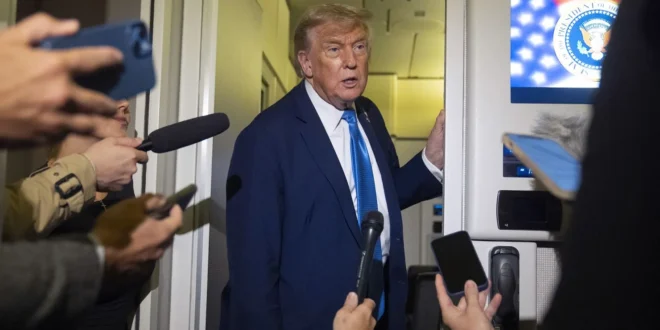

President Donald Trump insists that “productive” negotiations with Iran are underway. Senior Iranian officials, meanwhile, repeatedly deny that any such talks are taking place. One side may be misrepresenting reality, both may be shaping narratives, or the truth may lie somewhere more ambiguous than either account suggests.
The more important question is not simply whether talks are occurring, but whether either side benefits from acknowledging them. In the current strategic environment, both Washington and Tehran have incentives to control the narrative for domestic, regional, and economic reasons—often in ways that diverge from the underlying reality.
Public messaging from the U.S. side tends to emphasize progress and momentum. Claims of “very good” discussions and “major points of agreement” can serve multiple purposes: signaling strength, reassuring markets, and projecting diplomatic control. A stated deadline for response—such as the five-day window referenced by Trump—adds pressure not only on Iran, but also on other stakeholders observing the interaction.
On the Iranian side, denial of negotiations serves a different but equally calculated function. Figures such as Mohammad Bagher Ghalibaf have rejected the existence of talks, framing contrary reports as misinformation designed to influence financial and oil markets. From Tehran’s perspective, acknowledging negotiations prematurely could weaken internal political cohesion, expose negotiating positions, or create perceptions of concession under pressure.
In this context, strategic ambiguity becomes not a byproduct of diplomacy, but a tool within it. By keeping the existence, scope, or status of talks unclear, both sides retain flexibility. They can test signals, float trial balloons, and adjust positioning without committing publicly to a defined diplomatic track.
This ambiguity also extends to how information is consumed externally. Financial markets, regional actors, and allied governments often react not only to outcomes, but to perceptions of potential outcomes. Even unverified claims of progress or denial can influence expectations, pricing, and risk calculations across energy markets and geopolitical alignments.
Historically, U.S.–Iran interactions have often oscillated between direct engagement, indirect communication, and periods of complete silence. The current moment fits within that broader pattern, but with an added layer: information flows are faster, narratives are more contested, and the stakes—particularly around sanctions, nuclear thresholds, and regional stability—are tightly interlinked.
What makes the present situation analytically complex is that both narratives can coexist with partial truths. Informal channels may exist without formal negotiations. Exploratory contacts may occur without being recognized as official talks. Signals may be sent through intermediaries, third parties, or backchannel mechanisms that neither confirm nor fully deny engagement.
Thus, rather than asking which side is telling the truth in absolute terms, a more useful approach is to examine incentives. If acknowledging talks strengthens one side’s negotiating leverage while constraining the other, denial or confirmation becomes a strategic choice rather than a factual disclosure.
In this sense, the absence of confirmed negotiations may not indicate a lack of communication, but rather a preference by both parties to operate within a controlled information environment. Each side manages expectations, shapes perceptions, and calibrates its public posture to align with broader strategic objectives.
Ultimately, the standoff is not only about whether diplomacy is happening, but about how diplomacy is represented. In high-stakes geopolitical contests, the narrative surrounding negotiations can be almost as consequential as the negotiations themselves.
And in that space between what is said, what is denied, and what is left unsaid lies the enduring feature of this relationship: a carefully maintained ambiguity that allows both sides to signal, maneuver, and adapt—without fully revealing their hand.