

 Geostrategic Media Political Commentary, Analysis, Security, Defense

With Donald Trump back in the White House, and with the administration still selling Operation Epic Fury as a triumph and decisive American power, the gap between performance and policy is impossible to miss. Trump speaks as though force alone can solve whatever he touches. He treats a war zone like a stage and a maritime chokepoint like a prop in his next line. That is why he now looks trapped, with a rock in front of him and a ditch behind him. If he pushes harder, the costs rise fast. If he backs away, the failure is obvious. This is not clever brinkmanship. It is the result of a president who is very forgetful about practical matters, especially the kind that cannot be bullied into submission. A serious president would have started with geography, shipping, escalation risk, and allied limits. Trump started with slogans, and now the United States is boxed in by the realities he acted as if he could talk away.
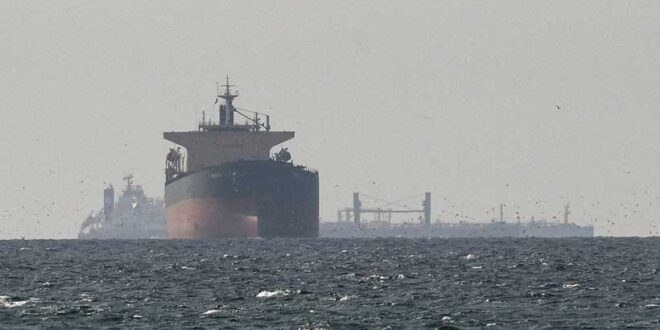
Anyone who bothered to read the Energy Information Administration or its warning that Hormuz is the world’s most important oil transit chokepoint knew this crisis was always going to turn on the Strait of Hormuz. Iran did not suddenly invent leverage. It has had that leverage for years, and every competent national security official knew it. Tehran now says it can completely close the Strait, while also saying it is already limiting access by enemy linked ships. On top of that, it has issued threats against Gulf energy and water systems after Trump delivered a 48 hour ultimatum. That is why Trump’s insistence that Hormuz must simply be opened on his command sounds childish, not presidential. A president does not order a chokepoint open the way a hotel boss demands a door be unlocked. A president understands that naval access, insurance, shipping confidence, allied cooperation, and retaliation all matter. Trump acts like he forgot every one of those facts, and that forgetfulness is now driving policy.
The costs are already visible. Oil prices have surged, American troop casualties are mounting, and more than 2,000 people have already been killed. Even worse for Trump, allies still do not want to own Trump’s war. That is the part he either forgot or never understood. He likes to talk as if America can always bark orders and others will fall in line. But allies are not props either. They have legal limits, political limits, public pressure, and their own judgment about whether this war was launched wisely. Trump is therefore stuck in the worst possible position. He cannot claim easy success because the Strait remains contested, the casualties keep rising, and the market shock keeps spreading. But he also cannot quietly step back without admitting that the whole idea of easy coercion has failed. This is what a rock in front and a ditch behind really looks like in foreign policy. It looks less like strength than like a leader who wandered into a trap and now hopes volume can pass for strategy.
The killing of Ali Khamenei was supposed, in the minds of its defenders, to shatter Tehran’s will. Instead, it opened a succession crisis that produced something more dangerous, not less dangerous. The leadership that emerged rejected de-escalation proposals, which means the assassination did not lead to a good outcome. It hardened the regime’s posture. It made compromise harder. It sent a message that Washington and its partners could kill but could not shape what came next. That is not the message of strength Trump wanted to send. It is the message of recklessness. It tells adversaries that the United States can blow up a system without knowing how to manage the aftermath. It also makes Trump look even weaker because he keeps shifting his tone. Trump has sent mixed messages, hinting at wind down one day and fresh coercion the next. A more stubborn regime in Tehran can read that confusion as clearly as anyone else can.
As for Pete Hegseth, the Pentagon biography page and the department’s own office page no longer even call him Secretary of Defence. They call him Secretary of War. Fine. Then let us speak plainly about war. Hegseth does not look like an independent steward of military judgment. He looks like Trump’s facilitator, the man who helps convert presidential impulse into operational momentum. Trump should stop talking magic. The situation is now harder than the slogans. If Washington insists on reopening Hormuz on American terms, there may be no remaining path except military force, and even that would not be clean, quick, or cheap. As the global energy system remains hostage to Hormuz, any serious effort to force open the passage would be costly in lives, treasure, and regional stability. Yet the opposite path also carries a brutal political truth for Trump. If he does not reopen it, his failure is plain. If he does reopen it by force, the price will expose how careless he was to stumble into this position in the first place. That is not victory. That is an expensive confession.


