Geostrategic Media Political Commentary, Analysis, Security, Defense

By Roya Bagher
A proposal to forgive student debt in exchange for enlistment in a potential US ground force against Iran raises a fundamental question about the relationship between military power and public willingness to fight. If such a proposal gains traction, it would suggest that the challenge facing Washington is not simply how to defeat an adversary, but how to persuade its own citizens to accept the costs of war. Advanced weapons, overwhelming firepower and technological superiority can shape a battlefield. They cannot, on their own, guarantee the political resolve required to sustain a prolonged conflict.
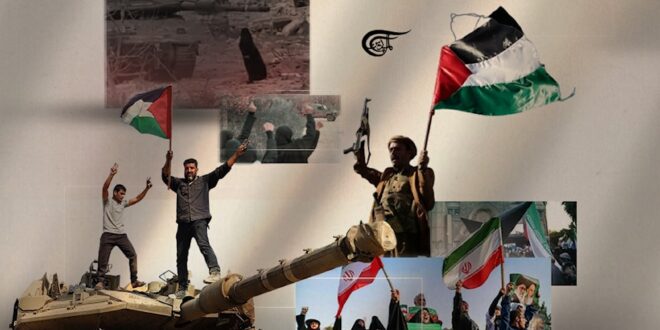
Since the outbreak of the US-Israeli war against Iran, the contrast between material capabilities and the willingness to endure sacrifice has become an increasingly important part of the debate. Images of Iranians gathering in public squares have been presented by Iranian officials and state media as evidence of national solidarity and determination. Meanwhile, reports of strain among US military personnel have raised questions about the human costs of prolonged deployments. These developments do not establish that either society speaks with one voice. They do, however, illustrate a strategic reality: military strength and public willingness to sustain a war are related, but they are not the same thing.
The distinction has broader implications for a conflict in which Washington and its allies may be tempted to equate the ability to inflict damage with the ability to compel political surrender.
Gaza exposed the limits of coercion
The war in Gaza offered an early and devastating illustration of the limits of overwhelming military force. Despite Israel’s considerable military superiority, its campaign did not translate into the complete elimination of Hamas. The conflict also generated prolonged strain within the Israeli military, including public reporting on psychological distress among personnel and concerns about suicides. The human cost to Palestinians, meanwhile, has been catastrophic.
Yet the destruction of homes, the displacement of families and the devastation of civilian infrastructure have not automatically extinguished Palestinian resistance or the determination of many Palestinians to remain on their land. For many, the struggle has become inseparable from questions of survival, identity and national self-determination.
This does not mean that suffering necessarily strengthens resistance, or that a population enduring bombardment is politically united. War can exhaust societies, fracture communities and create profound disagreements over strategy and leadership. But coercion carries no guarantee that its intended political outcome will follow. A military campaign can weaken an adversary’s capabilities while simultaneously deepening the grievances that sustain opposition.
That is the central problem with assuming that sufficient destruction will inevitably produce submission. Fear may compel some people to retreat, but it can also reinforce the conviction that surrender would leave them vulnerable to further violence.
Lebanon and Yemen: Resolve under pressure
Lebanon has offered another example of the complicated relationship between military pressure and political resilience. Israeli operations, including extensive bombardment and the September 2024 pager and communications-device attacks, inflicted severe harm and intensified the country’s already acute humanitarian and political challenges. Hezbollah’s continued capacity to fight, however, demonstrated that military superiority does not automatically translate into the rapid achievement of strategic objectives.
Nor should public expressions of solidarity with Hezbollah be mistaken for unanimous Lebanese opinion. Lebanon remains politically divided, and the costs of conflict have sharpened longstanding disagreements over security, sovereignty and the role of armed groups. Nevertheless, the persistence of resistance despite severe losses illustrates the difficulty of translating battlefield advantages into a durable political settlement.
Yemen presents a different but related case. The Houthi movement, also known as Ansar Allah, has operated under years of conflict, economic hardship and international pressure. Its attacks on shipping in the Red Sea demonstrated how an actor with far fewer conventional military resources than the United States could disrupt a strategically important maritime corridor and impose costs beyond its immediate theatre of operations.
The comparison is not about the moral equivalence of the actors or the legitimacy of every operation they conduct. It is about asymmetry. A weaker force does not need to match a superpower weapon for weapon if it can exploit geography, sustain operations, absorb losses and make the political and economic costs of intervention difficult to contain.
The Red Sea crisis showed that military superiority can coexist with strategic vulnerability. It also demonstrated that the capacity to disrupt international commerce does not necessarily translate into lasting political gains. Both realities matter when assessing the limits of force.
Iran and the question of national resolve
The war against Iran brings these questions into sharper focus. Tehran’s political leadership has long argued that external military pressure would strengthen national unity and deepen resistance to foreign intervention. Images of large public gatherings following the reported assassination of Iran’s supreme leader on February 28 have been presented as evidence of that claim.
Such images deserve attention, but they also require careful interpretation. Public demonstrations can reflect genuine grief, patriotism, religious conviction and opposition to foreign attacks. They may also coexist with political discontent, social divisions and disagreement over the government’s domestic policies. Attendance at rallies alone cannot establish the views of an entire population.
The strategic question, therefore, is not whether every Iranian supports the government or welcomes war. It is whether an external attack can create a broader sense that the defence of the country has become inseparable from the defence of its sovereignty and territorial integrity.
That distinction is crucial. Citizens who oppose their government in ordinary circumstances may still reject foreign military intervention. Political dissatisfaction does not automatically translate into support for regime change imposed from abroad. Nor does opposition to a foreign attack necessarily imply endorsement of every decision made by the authorities under attack.
Iranian officials have also promoted the Janfada campaign as a demonstration of popular readiness to defend the country. Claims that more than 31 million people registered for the initiative, along with reports of civilians preparing for the possibility of a ground invasion, have been used to reinforce the image of a society mobilising for national defence. Such figures and descriptions should be assessed against independently available evidence, and registration should not be treated as proof that every participant would take up arms.
Even with those qualifications, the underlying strategic issue remains significant. A country defending its own territory may draw on motivations that are difficult for an intervening power to reproduce: family ties, historical memory, national identity and the belief that defeat would carry consequences extending far beyond a change of government.
For Washington, the challenge would be to distinguish between the ability to damage Iran’s military infrastructure and the much harder task of determining how Iranian society would respond to a prolonged war or foreign ground invasion. Those are different questions, and confusing them could produce serious strategic miscalculations.
The human cost of prolonged deployment
The United States possesses formidable advantages in air power, intelligence, logistics, naval capabilities and precision-strike technology. Yet sustaining military operations also depends on people: service members who must remain deployed, families who endure long separations, and a public whose support can influence the political room available to national leaders.
Reports about the USS Abraham Lincoln and the strain associated with extended deployments have brought some of these pressures into public view. Accounts of exhaustion, mental-health concerns and incidents involving sailors going overboard underline the importance of crew welfare during prolonged operations. They do not, by themselves, establish that the carrier or the wider US military lacks the will to fight. Military morale varies across units and individuals, and isolated incidents cannot reliably measure the determination of an entire armed force.
Nevertheless, sustained deployments impose real human costs. Fatigue can affect readiness, retention and operational effectiveness, while the absence of a clear political objective can make the burdens of service harder to justify to personnel and their families.
The reported proposal to link debt forgiveness with military enlistment raises a related question about recruitment. Economic incentives have long played a role in the US all-volunteer military, and a debt-relief initiative would not automatically indicate a national unwillingness to fight. Its significance would depend on its actual terms, scale and political context. But the debate highlights a basic tension: a government may possess the capacity to wage war while struggling to build sufficient public support for the personnel commitments that a larger conflict would require.
A ground war against a country as large and militarily complex as Iran would pose challenges that air and naval campaigns alone cannot resolve. It would require sustained manpower, extensive logistical support, political justification and a willingness to accept casualties. The availability of advanced weapons cannot eliminate those requirements.
Firepower is not the same as strategic success
Across Gaza, Lebanon, Yemen and Iran, the relationship between military superiority and political outcomes has proved more complicated than a simple calculation of weapons and destruction would suggest.
This does not mean that resolve always defeats technology, or that weaker forces inevitably prevail against stronger ones. Military capabilities matter enormously. Air superiority, intelligence, logistics, industrial capacity and command structures can determine what an armed force is able to accomplish. Societies can also become exhausted, and the costs of war can erode support for resistance as readily as they can strengthen it.
The point is narrower, but strategically important: the destruction of an adversary’s capabilities is not synonymous with the achievement of political objectives. A campaign may inflict extensive damage without producing the political concessions its architects expected. It may also strengthen the determination of some members of the targeted population while alienating others. The eventual outcome depends on the interaction of military pressure, domestic politics, leadership decisions, external support and the perceived alternatives to continued resistance.
For Washington, the critical question is not simply whether the United States can strike Iran harder than Iran can strike back. It is whether the use of force can produce a sustainable political outcome at an acceptable human, economic and strategic cost.
Military power can destroy infrastructure, degrade weapons systems and disrupt command networks. It cannot reliably dictate how a population interprets an attack, how long its armed forces will continue fighting, or what sacrifices its leaders and citizens will accept. Those calculations become particularly difficult when a conflict is framed by the defending side as a struggle over national survival.
A strategy that underestimates these dynamics risks mistaking devastation for progress and tactical success for political victory. The decisive measure of a war is not merely how much destruction one side can inflict. It is whether the military campaign achieves its stated objectives—and whether the political settlement that follows can endure.
The question facing Washington, then, is not whether American military power is formidable. It plainly is. The harder question is whether that power can deliver the political outcome its leaders seek when the opposing society is prepared to resist, the costs of intervention continue to mount, and the path from battlefield dominance to lasting settlement remains uncertain.
That is the gap between weapons and will. No amount of firepower can make it disappear.